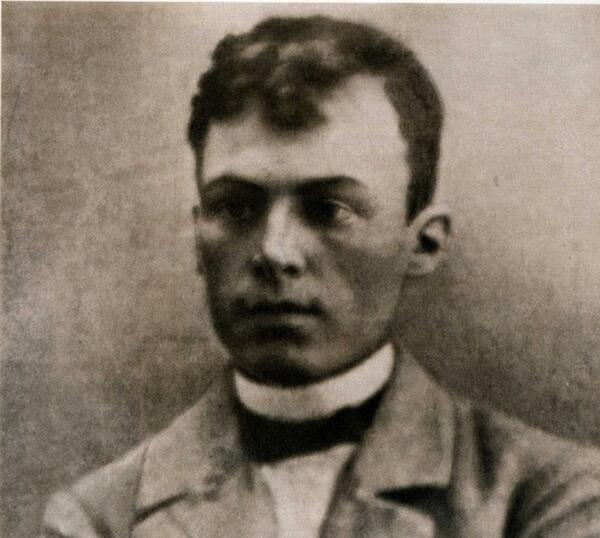
Yefim Chestnyakov was born to a peasant family on December 19, 1874 (according to the Julian calendar), in the village of Shablovo of Kologrivsky Uyezd in the Kostroma Governorate. After finishing the local school in Kologriv and the Novinskaya teacher training college in the Yaroslavl Governorate, Yefim Chestnyakov worked as a public school teacher in the Kostroma Governorate: at Zdemirovsky primary school near the village of Krasnoye, and at the Ugletsky primary school in Kinesheemsky Uyezd.
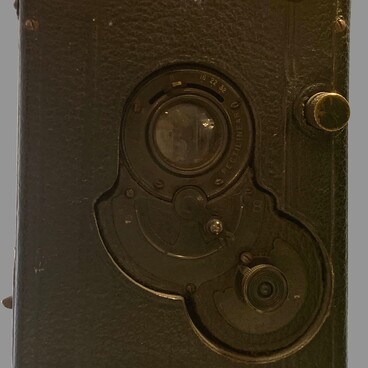
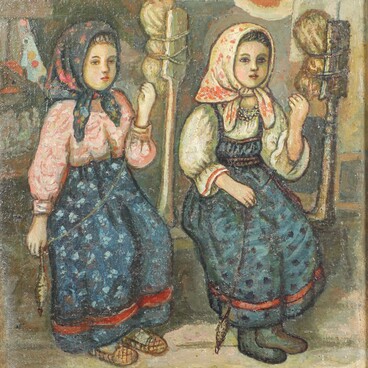
His dream of becoming an artist and tapping into his natural abilities drew him to Saint Petersburg. In 1899, Yefim Chestnyakov was admitted into the philanthropic art studio of Princess Maria Tenisheva, where he was trained professionally by Dmitry Shcherbinovsky under the general guidance of Ilya Repin. In the hopes of obtaining the necessary qualifications to enroll in the Academy of Arts, Yefim Chestnyakov followed Ilya Repin’s advice and continued his studies with Igishin and Skornyakov at the Kazan Art School. Later on, he was able to audit a life-drawing class at the higher school of art, affiliated with the Academy of Arts, where his teachers included Vasily Savinsky, Jan Ciągliński and Grigoriy Myasoyedov. In 1905, the Academy of Arts had to close because of civil unrest. Yefim Chestnyakov was forced to return home, to the village of Shablovo. From 1905 to 1913, he created many of his paintings and drawings as well as figurines, which he referred to as clay sculptures. During that period, the artist also worked on his literary creations — poems, tales, epic poems and essays on philosophy; did photography and created a children’s theater.
In 1913, laden with his art work, Yefim Chestnyakov returned to Saint Petersburg in the hopes of promoting folk art, finding like-minded individuals and continuing his studies under Ilya Repin. There he met with other artists and prominent Russian intellectuals, and actively collaborated with publishing houses. His wonderful fairy tales, ‘Sergiyushko’ (diminutive for Sergey), ‘A magic apple’ and ‘Ivanushko’ (diminutive for Ivan), were published for the first time then. World War I shattered many of Yefim Chestnyakov’s dreams — he was forced to go back home once again. Afterwards, he remained in the Kologrivsky Nature Reserve until his death. The artist dedicated his entire life to creating a universal peasant culture, which he perceived as a healing balm for the spirit and the mind. In his works of art, Yefim Chestnyakov captured the essence of Russian peasants’ spiritual world, with its Orthodox Christian faith, folklore and ties with the natural world, thus preserving all of this for future generations.
During the years immediately following the 1917 revolution, Yefim Chestnyakov tried to align his view of folk art with policies on culture of the Soviet regime. He was involved in the projects of Kologrivsky Proletkult (an institution dedicated to the culture of the proletariat), and headed the theater club and art studio at the Kologrivsky House of Culture. However, his universal peasant culture concept was incompatible with everyday life at the time, and he was forced to withdraw from public life. The artist died in 1961 before his art had a chance to gain recognition.
His dream of becoming an artist and tapping into his natural abilities drew him to Saint Petersburg. In 1899, Yefim Chestnyakov was admitted into the philanthropic art studio of Princess Maria Tenisheva, where he was trained professionally by Dmitry Shcherbinovsky under the general guidance of Ilya Repin. In the hopes of obtaining the necessary qualifications to enroll in the Academy of Arts, Yefim Chestnyakov followed Ilya Repin’s advice and continued his studies with Igishin and Skornyakov at the Kazan Art School. Later on, he was able to audit a life-drawing class at the higher school of art, affiliated with the Academy of Arts, where his teachers included Vasily Savinsky, Jan Ciągliński and Grigoriy Myasoyedov. In 1905, the Academy of Arts had to close because of civil unrest. Yefim Chestnyakov was forced to return home, to the village of Shablovo. From 1905 to 1913, he created many of his paintings and drawings as well as figurines, which he referred to as clay sculptures. During that period, the artist also worked on his literary creations — poems, tales, epic poems and essays on philosophy; did photography and created a children’s theater.
In 1913, laden with his art work, Yefim Chestnyakov returned to Saint Petersburg in the hopes of promoting folk art, finding like-minded individuals and continuing his studies under Ilya Repin. There he met with other artists and prominent Russian intellectuals, and actively collaborated with publishing houses. His wonderful fairy tales, ‘Sergiyushko’ (diminutive for Sergey), ‘A magic apple’ and ‘Ivanushko’ (diminutive for Ivan), were published for the first time then. World War I shattered many of Yefim Chestnyakov’s dreams — he was forced to go back home once again. Afterwards, he remained in the Kologrivsky Nature Reserve until his death. The artist dedicated his entire life to creating a universal peasant culture, which he perceived as a healing balm for the spirit and the mind. In his works of art, Yefim Chestnyakov captured the essence of Russian peasants’ spiritual world, with its Orthodox Christian faith, folklore and ties with the natural world, thus preserving all of this for future generations.
During the years immediately following the 1917 revolution, Yefim Chestnyakov tried to align his view of folk art with policies on culture of the Soviet regime. He was involved in the projects of Kologrivsky Proletkult (an institution dedicated to the culture of the proletariat), and headed the theater club and art studio at the Kologrivsky House of Culture. However, his universal peasant culture concept was incompatible with everyday life at the time, and he was forced to withdraw from public life. The artist died in 1961 before his art had a chance to gain recognition.