Dominoes are an old board game for two to four people. Its main objective is to line up a chain of tiles (bones) by joining one to the other with halves of identical symbols (most often the same number of spots). This game is first mentioned in historical sources as a 12th century Chinese game called “bone plaques”. A total of forty-seven different variations of this game exist in Eastern countries, including some with very poetic names: “Carnations in the Mist”, “Entering the Pagoda”, “Leap of the Gazelle”. The pieces for these have different colors, indicating the value (class) of the tile; doubles are also included.
It is likely that tiles with numerical symbols came to China even earlier from India. The Hindus, like the Koreans, used them not for playing games, but for fortune telling. In some places even today, such tiles remain an attribute of mystical rituals.
The game only made its way to European countries thanks to Marco Polo. Italian monks were the first to appreciate it: unlike cards, it was allowed to the Catholic clergy. According to Max Vasmer, it was the monks who gave the game its Italian name, Domino, which is similar to “Domino”, meaning master or Lord. Black and white pieces were associated with white cloaks and black hoods of Dominicans, and the player who laid the first tile began the game with the obligatory praise Domino gracias — “Praise be to God”. In the secular version, dominoes are associated with the Venetian black and white carnival mask, with the winner being referred to as the master.
From Italy the tiles went to France and England and then spread all over Europe. Here the rules of the game changed: doubles and classes disappeared, but seven extra tiles with zero value (“blank”) appeared. Traditionally dominoes were carved from ivory with round inlays of ebony. The modern gaming industry uses more accessible materials: bone, carbon fiber, plastic, wood or metal.
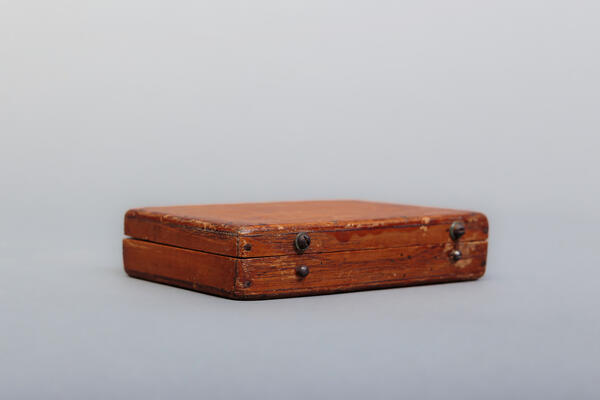
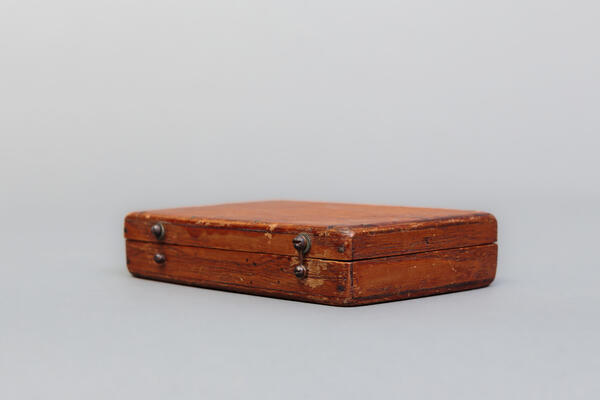
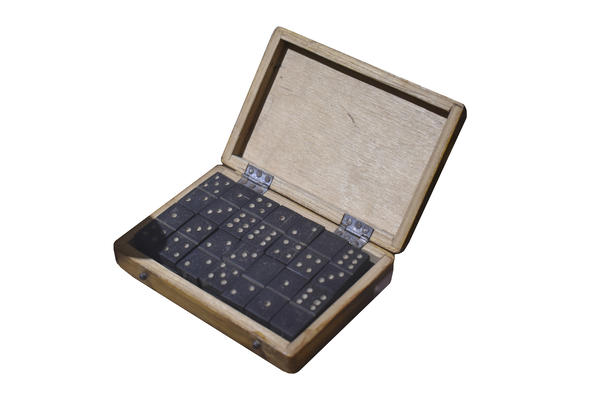
The domino set in the collection of the Museum of Folk Culture consists of 28 black tiles.
It is likely that tiles with numerical symbols came to China even earlier from India. The Hindus, like the Koreans, used them not for playing games, but for fortune telling. In some places even today, such tiles remain an attribute of mystical rituals.
The game only made its way to European countries thanks to Marco Polo. Italian monks were the first to appreciate it: unlike cards, it was allowed to the Catholic clergy. According to Max Vasmer, it was the monks who gave the game its Italian name, Domino, which is similar to “Domino”, meaning master or Lord. Black and white pieces were associated with white cloaks and black hoods of Dominicans, and the player who laid the first tile began the game with the obligatory praise Domino gracias — “Praise be to God”. In the secular version, dominoes are associated with the Venetian black and white carnival mask, with the winner being referred to as the master.
From Italy the tiles went to France and England and then spread all over Europe. Here the rules of the game changed: doubles and classes disappeared, but seven extra tiles with zero value (“blank”) appeared. Traditionally dominoes were carved from ivory with round inlays of ebony. The modern gaming industry uses more accessible materials: bone, carbon fiber, plastic, wood or metal.
The domino set in the collection of the Museum of Folk Culture consists of 28 black tiles.