Font
Color
Graphics
Изображение точки

To see AR mode in action:

1. Install ARTEFACT app for iOS or Android;

2. Find the exhibition «House with the Mezzanine»

3. Push the «Augmented reality» button and point your phone's camera at the exhibit;

Скрыть точки интересаПоказать точки интереса
Показать в высоком качестве

Perpetual calendar

Creation period
1899
Place of сreation
Ryazan, the Russian Empire
Dimensions
30x40x7 cm
Technique
wood, plywood, carving
1
Open in app
#5
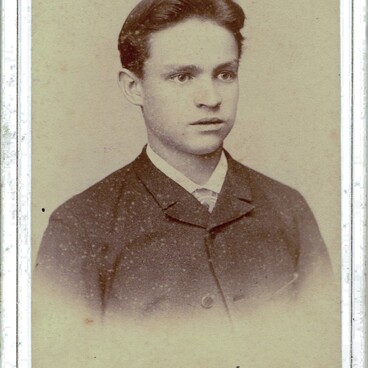
The priest Pyotr Dmitriyevich Pavlov used to say to his children, “Duty comes before pleasure.” His great-nephew Alexander Fyodorovich Pavlov wrote about him, “He was a man of strength and integrity to a ripe old age.” Pyotr Pavlov was an intellectually curious and sensitive person who stood out among other city priests with his worldly wisdom.
 
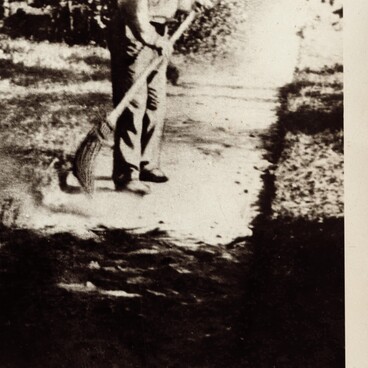
Pyotr Pavlov was a very considerate father. He cultivated compliance with a daily routine, proper work ethic, and diligence in his five children. Together with their father, the children spent time gardening and exercising. In the outbuildings, Pyotr Pavlov kept his carpentry tools. He enjoyed carving wood, did all the repair work around the house, and asked his sons to help him. Later, in his memoirs, the academician Pavlov wrote,

#11
And the foundation of all of this is my eternal gratitude to my father and mother, who taught me to live simply and modestly and gave me the opportunity to get a higher education.
#12
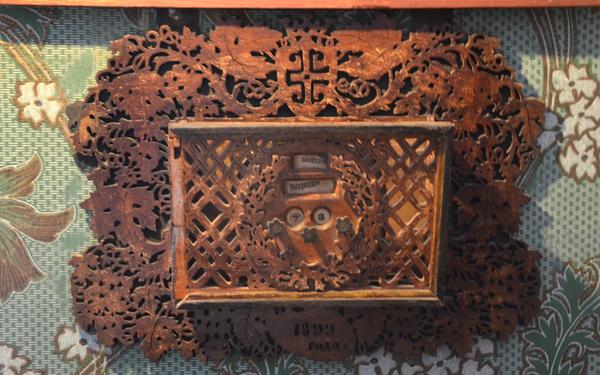
Several items made by Pyotr Pavlov have been preserved in the family house. One of them is a perpetual calendar that hangs over the desk in Pyotr Pavlov’s office. This is a wooden box in an openwork frame with the year 1899 carved into the surface. Pyotr Pavlov built a mechanism into the calendar that allowed setting any date, day of the week, and month. This is why such calendars were called perpetual. The carved pattern is designed in the shape of scrolls and leaves woven into a vine. The upper part is decorated with a symbolic cross. The calendar also had a pocket where Pyotr Pavlov could place letters and newspapers that he received.

Perpetual calendars were popular in Russia at the turn of the 20th century. There were pocket, tabletop, and wall-mounted versions, as well as reference books and literary almanacs. “At bedtime, the family read the calendar, ” is a phrase that can be found in the literature of that period. After the Great Patriotic War, perpetual calendars made of cardboard and later aluminum were mass-produced in the Soviet Union.

Disc calendars were easier to use: the disc was turned to select the year and month, and the mechanism showed the corresponding days of the week. Such discs were divided into 28 parts and were designed for up to 28 years. With the rapid development of the Internet and mobile communications in the new millennium, perpetual calendars fell into disuse and are only made as souvenirs.
#6
View in the State Catalogue
read morehide
00:00
00:00
1x

Perpetual calendar

Creation period
1899
Place of сreation
Ryazan, the Russian Empire
Dimensions
30x40x7 cm
Technique
wood, plywood, carving
1
Point your smartphone camera to open in the app
Share
VkontakteOdnoklassnikiTelegram
Share on my website
Copy linkCopied
Copy
Open in app
To see AR mode in action:
  1. Install ARTEFACT app for 
  2. iOS or Android;
  3. Find and download the «Paintings in Details» exhibition
  4. Push the «Augmented reality» button and point your phone's camera at the painting;
  5. Watch what happens on your phone screen whilst you flip through the pictures.
 
We use Cookies
Cookies on the Artefact Website. We use cookies to ensure that we give you the best experience on our website. If you continue without changing your settings, we'll assume that you are happy to receive all cookies on the Artefact website. However, if you would like to, you can change your cookie settings at any time.
Learn more about useHide
Content is available only in Russian

X

Нашли опечатку?...

%title%%type%