The basin of the Agan River in Siberia was first settled during the Stone Age. The culture and way of living of the indigenous population — the Khanty and Forest Nenets — developed in this region over many centuries. More than a hundred archaeological monuments of different periods have been discovered in the Agan River basin. Many of the types of houses and household buildings that were in use in the mid-20thcentury are now on the verge of extinction or have already been destroyed.
Among them is the skeleton-type Khanty dwelling in the form of a full or truncated pyramid. The construction of such a hut began with site preparation. A dry area was chosen in the forest, not far from a water body, and the site was cleared of branches and turf. As a rule, timber for the house was harvested in spring, as it was easier to deliver it to the construction site during that time.
Logs were split lengthwise, sanded, and left to dry for the summer. Pinewood was considered the most suitable material for construction. Flexible birch bark and moss for the roof and walls were prepared in July and August. A half-dugout house was built in late summer or early fall. It could be used for quite a long time, up to 50 years because moss protects the wood from decay.
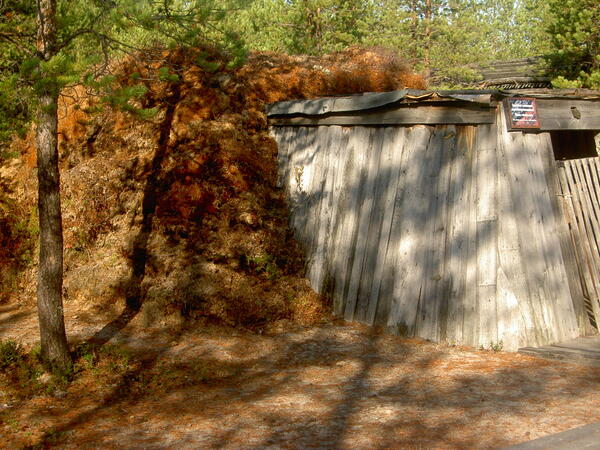
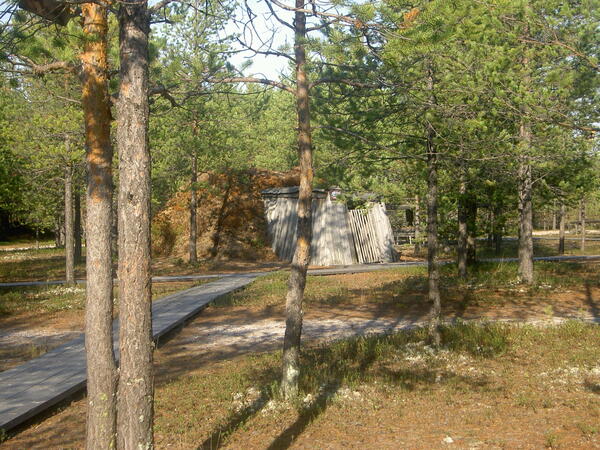
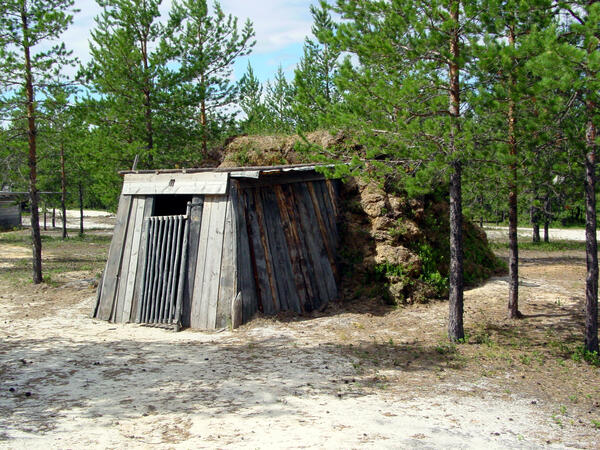
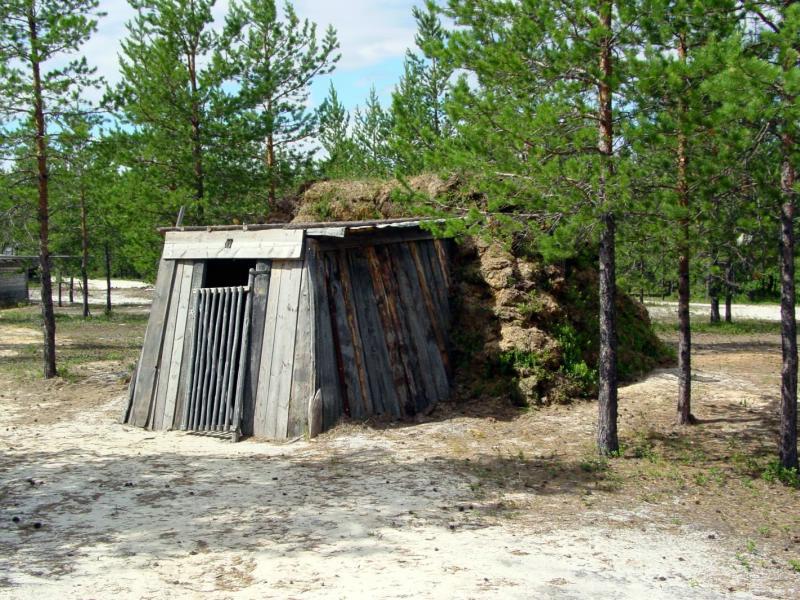
The Park Museum of the Varyogan Village features a half-dugout winter house partly covered with moss. It was built in 1992–1993 by Yegor Stepanovich Kazamkin, and the chuval — fireplace-type hearth — was made by his wife Anisya Ivanovna Kazamkina.
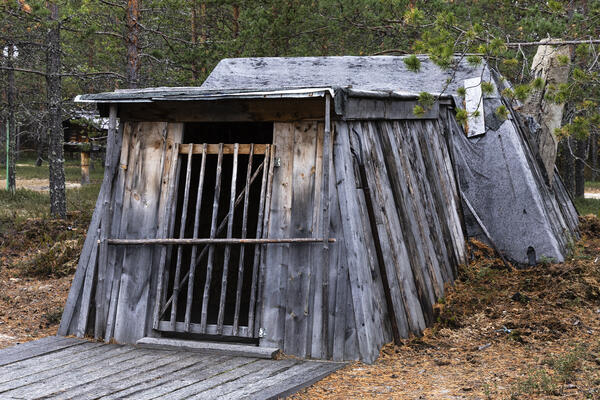
The skeleton-type half-dugout house has a quadrangular foundation. It is based on a skeleton structure of four inclined corner poles, with side poles attached to each of them. In total, there are 12 supporting poles in the house. Their tops are connected by a square frame. The skeleton structure is covered with boards, arranged in vertical rows at the bottom and in horizontal ones at the top. The roof and walls are covered with roofing felt and peat moss.
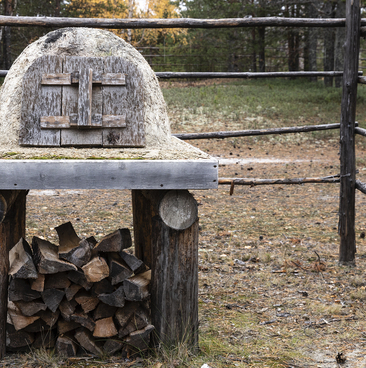
The floor was sunk 31 centimeters into the ground, covered with boards, and painted brown. Benches are installed along the back, right, and left walls of the house. On the right side of the entrance, there is a clay chuval — a hearth, the main place in the house. The ceiling is covered with planks, and there is a small window in its center.
The roof of the house is flat. The boarded door
opens outwards, fits very tightly, and does not freeze in winter. The entrance
to the house is through a special entry room supported by two poles. In the
Khanty language, this house is called “tulekh chamech kot”.