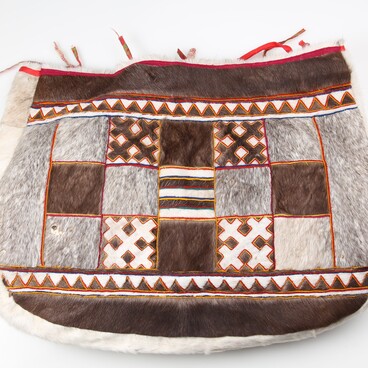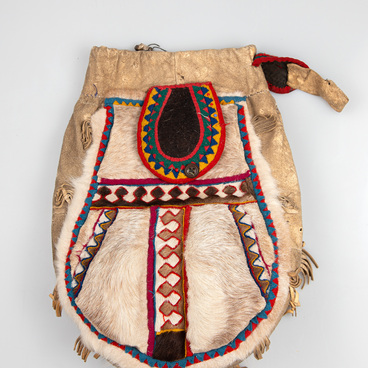
Traditional clothing of each nation reflects its ethnic character, cultural development and climatic conditions.
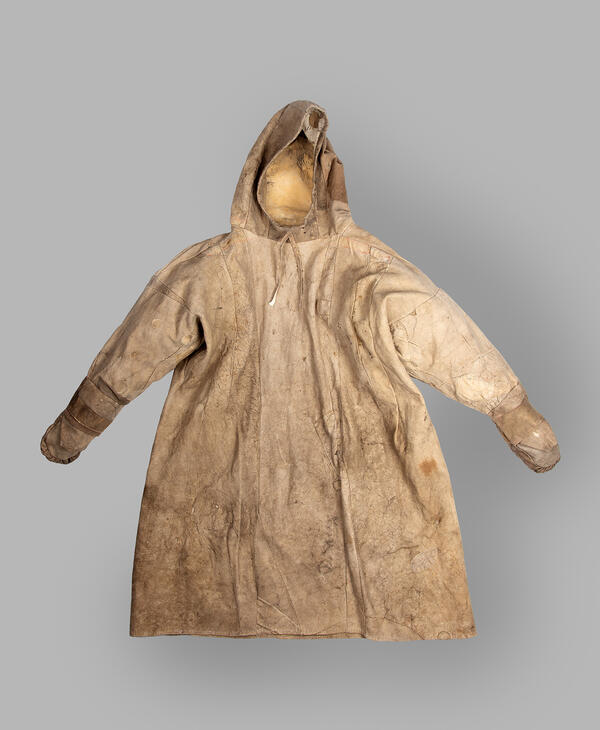
A malitsa is a traditional Nenets clothing for babies from one to six years old. Children have always been the center of the Nenets family; they were considered the blessing of the gods and great happiness. Clothes for children were sewn from the softest materials: deer skins were carefully dressed, and the skin was tanned and dried. Winter coats were sewn from fur, and summer ones from buckskin.
Buckskin (rovduga) is suede made from deer or elk skins. The process of making it is difficult and long. To obtain rovduga, the deer skin was soaked until the hair began to come off on its own. Then it was moistened with tea leftovers and the remnants of the pile were removed with a scraper. Until now, this technology is used by the Nenets even in urban areas.
Malitsa shirts from rovduga and fur were sewn in a similar manner. These are spacious shirts that reach below the knees with a hole for the head. There was no slit on the malitsa, so they did not swing open in the wind or during the game. The sleeves of the malitsa ended in mittens, so it was impossible to lose them. In order to take off the mitten, special cuts were made at the level of the wrists. From above, a deep hood with a drawstring around the face was sewn to the malitsa to regulate the fit. In such clothes, in winter, the child was protected from frost, and in summer — from annoying insects.
Both adults and children wore kisy or pimy — high boots. The winter ones were sewn from a double layer of reindeer fur, and the summer ones — from rovduga. Men’s kisy were tied under the knee, and women’s were attached to the belt. The combination of a malitsa and kisy covered the entire body, except for the face.
The Nenets are the largest of the indigenous peoples of the North. The Forest Nenets live in the taiga along the Pur River and the tributaries of the Ob River. Their main economic activities are reindeer herding, hunting and fishing. Breeding domestic reindeer has provided the Nenets with everything they need for hundreds of years and remains their main source of life: the Nenets travel in reindeer sleighs, consume reindeer meat, fat and milk, make strong tendon threads and bone arrowheads, and also use reindeer skins to sew clothes and tents for the portable Nenets dwelling called a chum.
A malitsa is a traditional Nenets clothing for babies from one to six years old. Children have always been the center of the Nenets family; they were considered the blessing of the gods and great happiness. Clothes for children were sewn from the softest materials: deer skins were carefully dressed, and the skin was tanned and dried. Winter coats were sewn from fur, and summer ones from buckskin.
Buckskin (rovduga) is suede made from deer or elk skins. The process of making it is difficult and long. To obtain rovduga, the deer skin was soaked until the hair began to come off on its own. Then it was moistened with tea leftovers and the remnants of the pile were removed with a scraper. Until now, this technology is used by the Nenets even in urban areas.
Malitsa shirts from rovduga and fur were sewn in a similar manner. These are spacious shirts that reach below the knees with a hole for the head. There was no slit on the malitsa, so they did not swing open in the wind or during the game. The sleeves of the malitsa ended in mittens, so it was impossible to lose them. In order to take off the mitten, special cuts were made at the level of the wrists. From above, a deep hood with a drawstring around the face was sewn to the malitsa to regulate the fit. In such clothes, in winter, the child was protected from frost, and in summer — from annoying insects.
Both adults and children wore kisy or pimy — high boots. The winter ones were sewn from a double layer of reindeer fur, and the summer ones — from rovduga. Men’s kisy were tied under the knee, and women’s were attached to the belt. The combination of a malitsa and kisy covered the entire body, except for the face.
The Nenets are the largest of the indigenous peoples of the North. The Forest Nenets live in the taiga along the Pur River and the tributaries of the Ob River. Their main economic activities are reindeer herding, hunting and fishing. Breeding domestic reindeer has provided the Nenets with everything they need for hundreds of years and remains their main source of life: the Nenets travel in reindeer sleighs, consume reindeer meat, fat and milk, make strong tendon threads and bone arrowheads, and also use reindeer skins to sew clothes and tents for the portable Nenets dwelling called a chum.