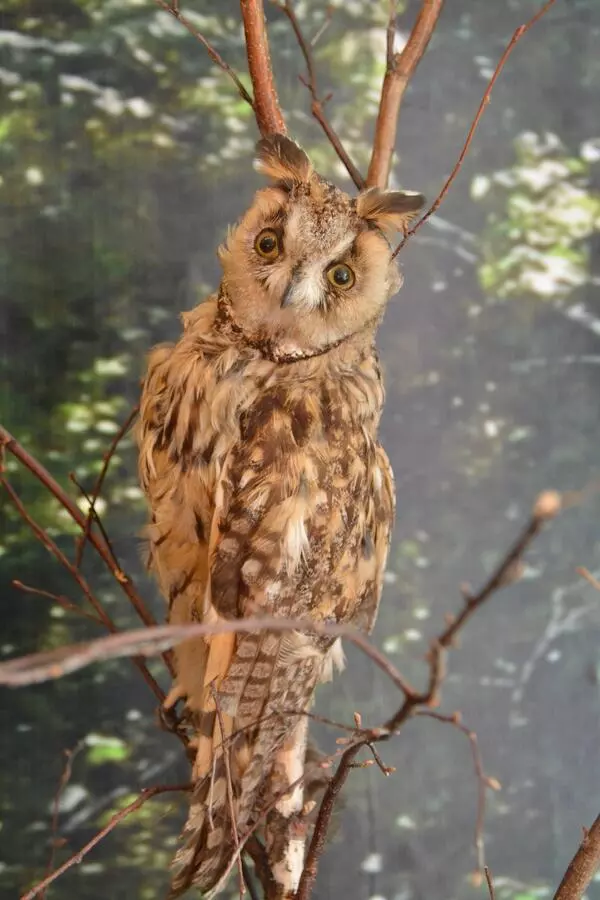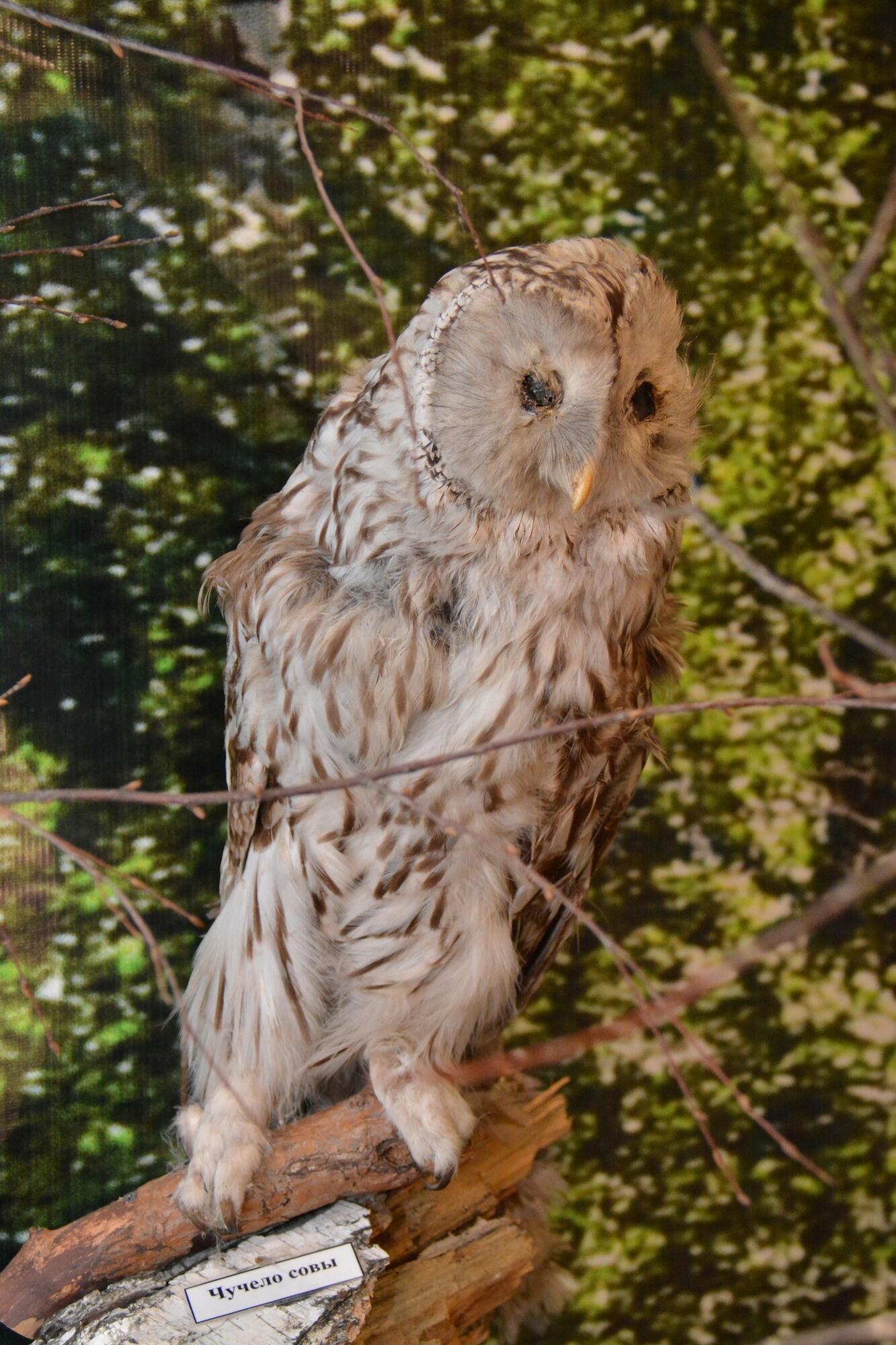


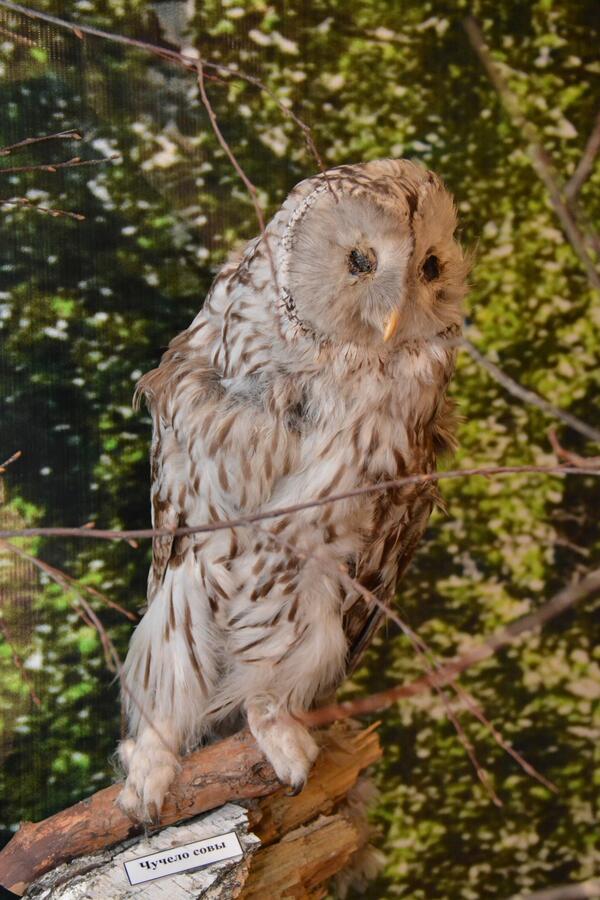
The tawny owl is a squat and short-tailed bird in the true owl family. The bird is a bit larger in size than the crow. Its length reaches about 38 centimeters, while its weight is between 400 and 650 grams. Its wingspan measures up to 104 centimeters. The tawny owl has dark eyes and a round head it can turn 270 degrees. The facial disc is well-defined, the head has no tufts. The bird’s coat has disguise coloring. In the western and southern regions of the tawny owl’s range, shades of red dominate the plumage, while gray is more frequent in Eastern Europe, the Urals, and Siberia. Dark brown coloring can be found only in the North and South Caucasus.
The tawny owl inhabits most of Europe and Central Asia. In most European languages, the bird’s name means “wood bird” because the tawny owl prefers woodlands and mixed woodlands, although it can also be found in conifer forests as well. The bird tolerates human presence fairly well and often inhabits thick city parks and old gardens.
The tawny owl preys only at night. It usually prowls using its perfect hearing. The tawny owl finds its prey in the grass by the slightest sounds and then glides towards it or swoops. The tawny owl’s diet relies mostly on mouse-lice rodents, moles, shrews, sometimes young hares. It often eats small birds, frogs, reptiles, insects, and mussels.
In the mating season, the tawny owl becomes rather communicative. The male utters mating calls when seating on a tree or flying—then wing-flapping can be heard. Apparently, that is why people used to associate their night calls and noisy flies with evil spirits. Otherwise, the tawny owl is a very silent creature. It lives alone or in permanent pairs that stay together throughout their lives. Adult tawny owls are very territorial—they can attack cats, dogs, foxes, and even people if birds consider them a threat.
The tawny owl is one of the most common and numerous species of owls, so it needs no conservation action. In the wild, the average lifespan of the tawny owl is about five years. However, there was a captive tawny owl that lived 27 years. The primary causes of death of the tawny owl include collisions with cars, power lines, and similar antoropeginc factors.
The tawny owl inhabits most of Europe and Central Asia. In most European languages, the bird’s name means “wood bird” because the tawny owl prefers woodlands and mixed woodlands, although it can also be found in conifer forests as well. The bird tolerates human presence fairly well and often inhabits thick city parks and old gardens.
The tawny owl preys only at night. It usually prowls using its perfect hearing. The tawny owl finds its prey in the grass by the slightest sounds and then glides towards it or swoops. The tawny owl’s diet relies mostly on mouse-lice rodents, moles, shrews, sometimes young hares. It often eats small birds, frogs, reptiles, insects, and mussels.
In the mating season, the tawny owl becomes rather communicative. The male utters mating calls when seating on a tree or flying—then wing-flapping can be heard. Apparently, that is why people used to associate their night calls and noisy flies with evil spirits. Otherwise, the tawny owl is a very silent creature. It lives alone or in permanent pairs that stay together throughout their lives. Adult tawny owls are very territorial—they can attack cats, dogs, foxes, and even people if birds consider them a threat.
The tawny owl is one of the most common and numerous species of owls, so it needs no conservation action. In the wild, the average lifespan of the tawny owl is about five years. However, there was a captive tawny owl that lived 27 years. The primary causes of death of the tawny owl include collisions with cars, power lines, and similar antoropeginc factors.