Steel art made by Tula craftsmen is the pride of any museum collection. The art of Tula gunsmiths in Russia has long been synonymous with unsurpassed craftsmanship. Their products were a brilliant combination of original design, high quality metalwork and beauty of the decoration.
Masterful steel work and the desire to achieve utmost perfection in decorating weapons and secular objects by Tula’s “golden” blacksmiths caused the emergence of an extremely peculiar and interesting trend in Russian decorative art of the 18th–19th centuries. The fame of the Tula masters goes back to the 16th century, when the blacksmiths who lived in the settlement and did state orders for the manufacture of the pishchal and samopal rifles. In 1712, by decree of Peter I, an armory was opened here, and over time Tula became the center of Russian arms production.
At the beginning of the 18th century, in addition to doing state weapon contracts, Tula craftsmen also made household items, thus contributing to the development of various local crafts. Tula gunsmiths were at the peak of their trade in the second half of the 18th century, when the phenomenon of Tula steel art entered the spotlight. There is no doubt that the development of the arms industry was primarily in the state’s interests, but household, or “particular”, as they were called in the 18th century, products were of artistic value and surprised Europeans with their unusual elegance and fine work.
At the beginning of the 19th century, due to the wars of 1805–1815, Tula gunsmiths were forbidden to manufacture household items. And when in 1824, the gunsmiths were again allowed to work privately, steel art ceased to exist.
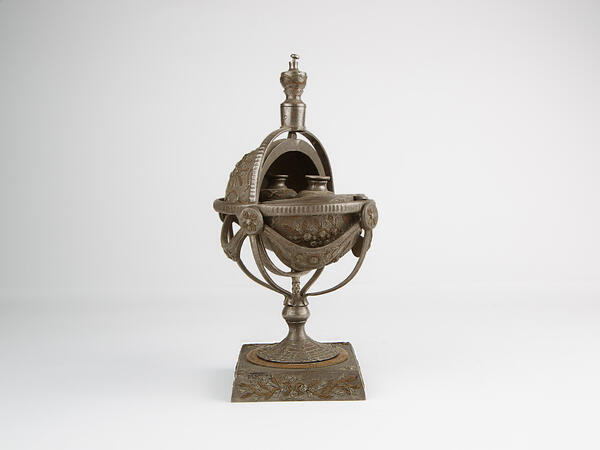
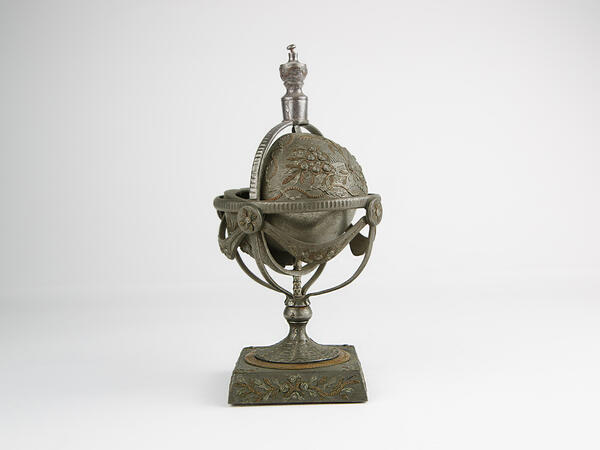
This globe-shaped inkstand on a thin leg made of polished steel, that once adorned a desk of a Russian aristocrat, is also attributed to Tula steel art. The inkwell and the sander are hidden inside the globe, which can be opened by pressing a special spring. A calendar is engraved on the bottom of the stand. When the leg rotates, the numbers line up according to the days of the week, allowing one to look through past and future dates.