

Pocket watches appeared in the 17th century. By that time, they had already invented a clock mechanism of the usual size, and this made it possible to make a watch that fit in a pocket of clothing. The first pocket watches did not determine the time very accurately. They had only one hand. A couple of centuries later, a minute hand appeared on a pocket watch, and even later - a second hand. The art of watchmaking developed, with more and more attention being paid to the design of pocket watches. Many watches have become the masterpieces of jewelry art. Products began to be covered with enamel and encrusted with precious stones. Such watches demonstrated the high status of their owner.
Pocket watches were worn in a special small pocket of a vest or trousers, i.e. an eyelet. They were considered a mandatory part of men’s wardrobe. These watches were usually attached to a chain, which made it easier to get the watch out of the pocket. In addition, the chain protected the watch from loss. Until the middle of the 19th century, the watch was supplemented by another element, namely: a separate key, which was hung on a chain. At that time, most pocket watches were wound with this key.
At the end of the 19th century, the first wristwatches appeared, but many people found them inconvenient and continued to use pocket watches. Only by the 20-30s of the 20th century, wristwatches were mass-produced, and pocket watches were worn as an attribute indicating the high social status of the owner. Gradually, they disappeared from everyday use and remained only in family collections. As a rule, pocket watches were passed along with jewelry from generation to generation as an heirloom.
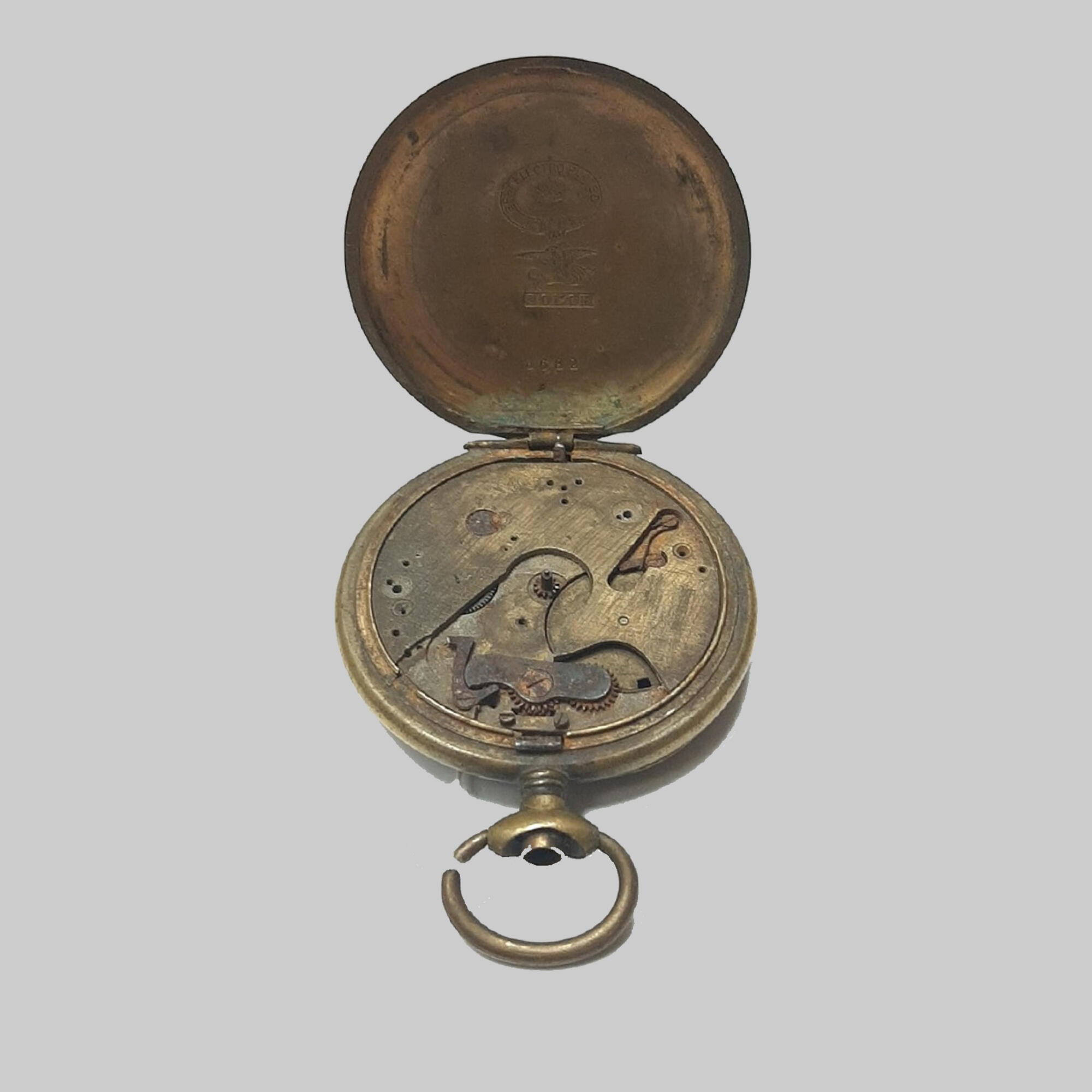
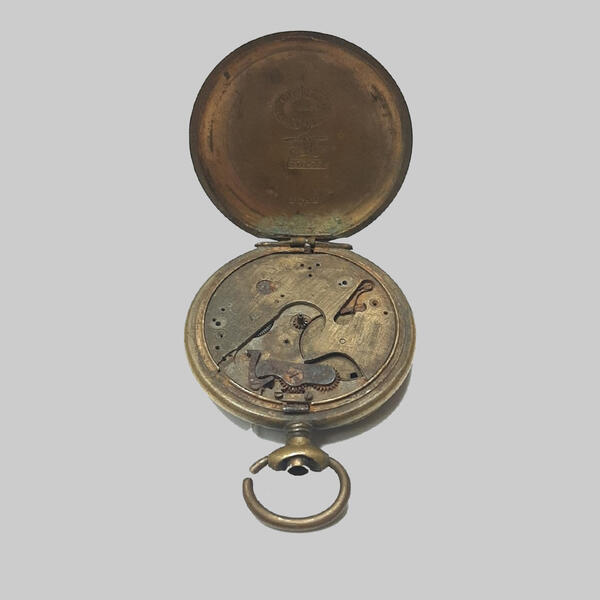
Pocket watches are also in the collection of the Local History Museum of Kopeysk City District. This product is golden in color with two lids. The dial and moving parts of the mechanism are missing. The watch is made by the Swiss company Montilier founded in 1852. On one lid of the watch, there is an image of three silver medals and the inscription “Fabrication supérieure garantie”, which means “high quality guarantee”. On the second lid of the watch, there is the stamp featuring an eagle and a banner, with the name of the watch “SOLOR” placed under the image of a bird.
Pocket watches were worn in a special small pocket of a vest or trousers, i.e. an eyelet. They were considered a mandatory part of men’s wardrobe. These watches were usually attached to a chain, which made it easier to get the watch out of the pocket. In addition, the chain protected the watch from loss. Until the middle of the 19th century, the watch was supplemented by another element, namely: a separate key, which was hung on a chain. At that time, most pocket watches were wound with this key.
At the end of the 19th century, the first wristwatches appeared, but many people found them inconvenient and continued to use pocket watches. Only by the 20-30s of the 20th century, wristwatches were mass-produced, and pocket watches were worn as an attribute indicating the high social status of the owner. Gradually, they disappeared from everyday use and remained only in family collections. As a rule, pocket watches were passed along with jewelry from generation to generation as an heirloom.
Pocket watches are also in the collection of the Local History Museum of Kopeysk City District. This product is golden in color with two lids. The dial and moving parts of the mechanism are missing. The watch is made by the Swiss company Montilier founded in 1852. On one lid of the watch, there is an image of three silver medals and the inscription “Fabrication supérieure garantie”, which means “high quality guarantee”. On the second lid of the watch, there is the stamp featuring an eagle and a banner, with the name of the watch “SOLOR” placed under the image of a bird.