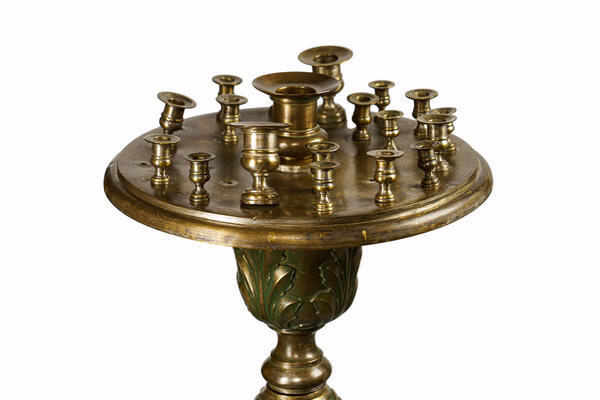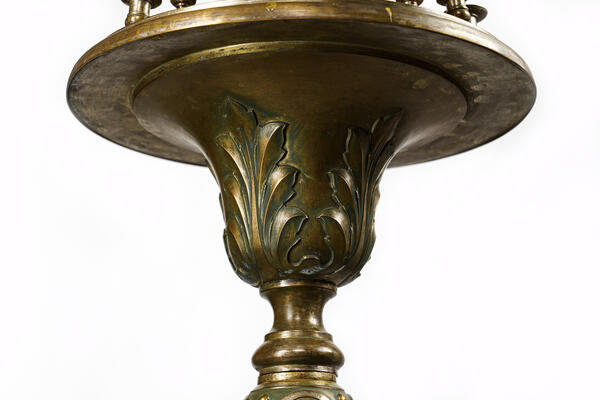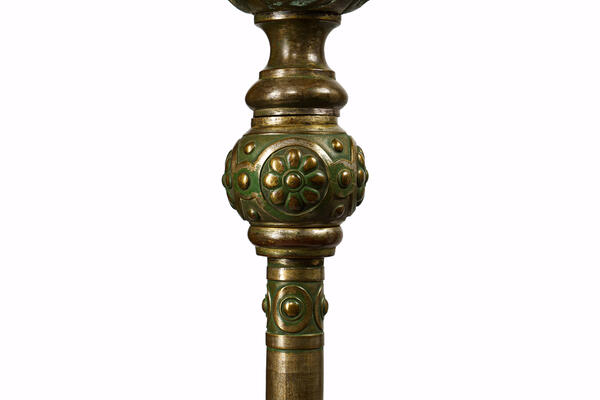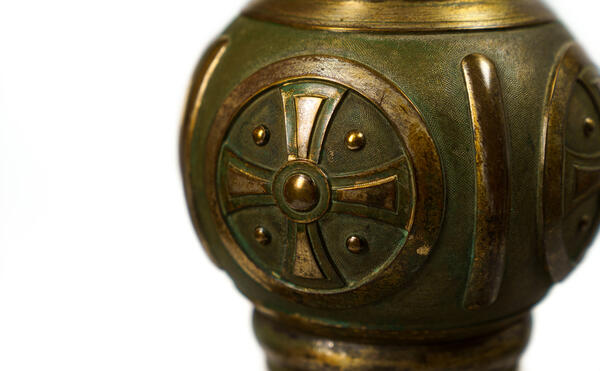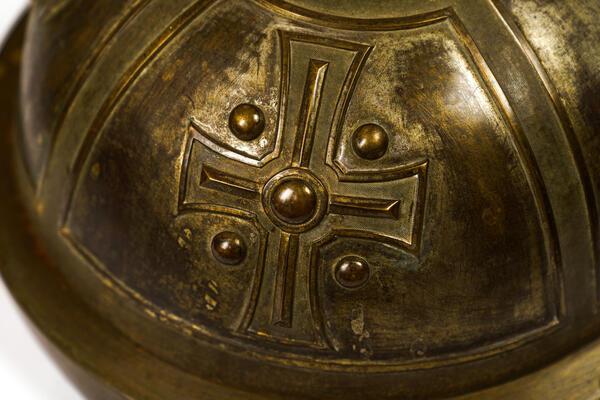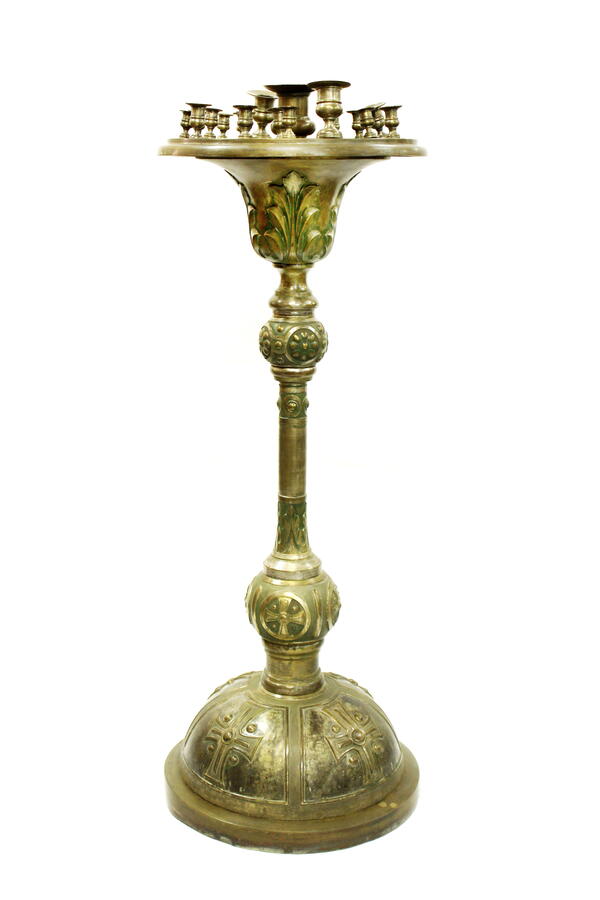
The exhibition of the Museum of Sarov features a metal church candlestick, or “a kandilo.”
A kandilo (from the Greek κανδήλα — lamp) is a large candlestick placed in front of an icon in an Orthodox church. If the candlestick holds between 7 and 12 candles, it is called a polykandilo; if it holds more than 12 candles, it is referred to as a panikadilo. Panikadilos are usually suspended in the center of the church under the dome.
Such candlesticks are placed in front of icons, relics, and crucifixes. The most common type of candlestick has holders for candles. These holders can be of the same or different diameters.
In ancient times, there were candlesticks in which, instead of a central candle, a metal or porcelain lamp with burning oil was placed on a special pipe made of metal or glass. This allowed the flame of the lamp to be higher than the candles. This carried a special symbolism: the lamp in the center of the candlestick symbolized the Savior, while the candles represented the saints or simply all members of the Church. This practice of decorating candlesticks is still found today. The oil from the lamp is used on certain days during all-night vigils in monasteries for anointing with oil.
The museum exhibit is a candlestick with a round base that has 25 candle holders, 6 of which are missing. The holders themselves have different diameters.
The candlestick, on which believers place candles as a sign of their love and reverence, symbolizes the Church, where people gather, called to burn with the fire of prayer and to be soft and pliable before God, like wax, and warm and merciful towards their neighbors.
In the book “Ideals of
Christian Life, ” Yevgeny Poselyanin recounted a pious tradition established by
St. Seraphim in his monastic cell,