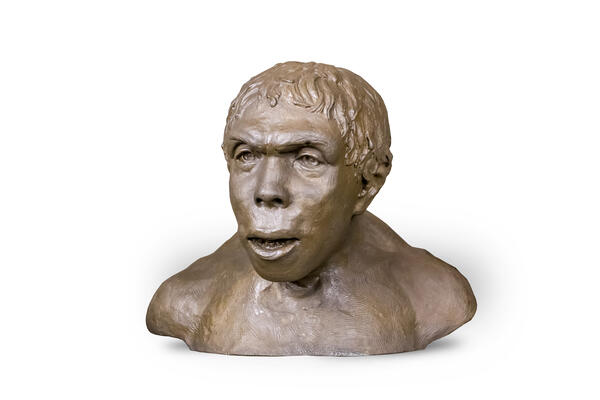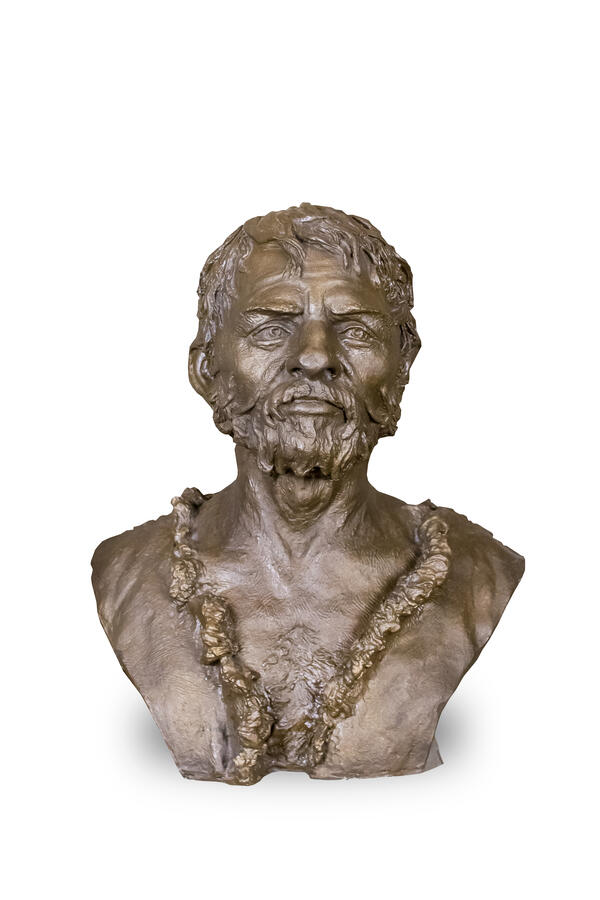
The word ‘Cro-Magnons’ is a commonly used name for the ancestors of modern humans that inhabited Europe from about 40,000 to 50,000 years ago.The name originated from the rock shelter, Cro-Magnon, France: that’s where, in 1868, paleontologist Louis Lartet found several ancient human skeletons with stone artifacts. Later, the remains of Cro-Magnons were found in other countries: Great Britain, the Czech Republic, Serbia, Romania, Russia.
Cro-Magnons were the first ancestors of modern humans that scientists were able to find. There are several theories of their origins. According to one of them, the first representatives of this species lived in Africa from about 130,000 to 180,000 years ago. Then, over time, they migrated to Eurasia. At the same time, one group settled on the Indian ocean coast, and the second one settled in the prairies of Central Asia. A few thousands of years later, some of Cro-Magnons populated the territory of modern Europe.
Cro-Magnons looked similar in appearance with nowadays people, except that they did not have races. They had tribal communities of up to 100 people and lived in caves, dugouts, tents made from animal hides, or small stone cabins. People of this species were able to create more sophisticated tools than the Neanderthals who lived in the same period. They wore clothes stitched from hides but used animal sinews instead of threads. Moreover, Cro-Magnons could make jewelry from horns, bones, and stone. They usually created cave paintings with scenes of hunting or battles, images of people, animals, and birds. Such paintings could have ritual sense, for example, tribal voodoo used them trying to bring luck for their tribesmen during the hunt.
The early men had a mainly plant-based diet. However, the more they developed their tools, including hunting tools, the more meat-based became their diet.
Cro-magnons had burial rituals: dead were scattered with red ochre, bracelets were put on their hands, and a special net on the hair, a flat stone covered their faces. As usual, they put food, jewelry, tools, and everything needed for hunting.