#1
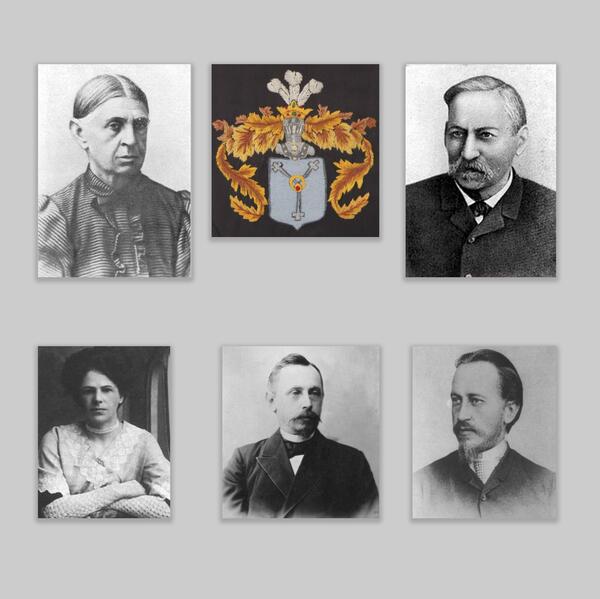
Семейные фотографии Буниных, герб Буниных
#21
#3
#4
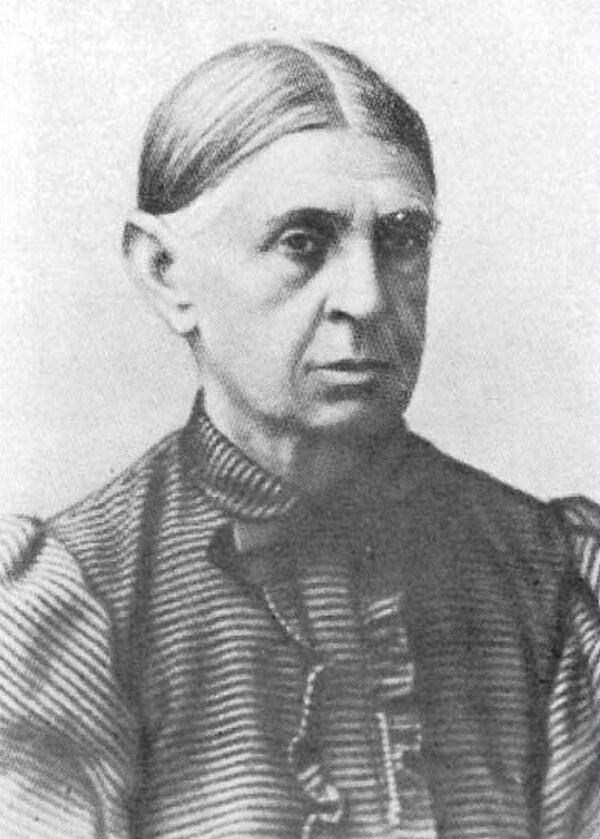
LyudmIla Bunina (nee Chubarova) was the mother of Ivan Bunin. She was very different from her husband in many ways, but still there were some features that they had in common - kind soul and good health, which, despite all the sorrows and losses allowed them to live together a long life. Before her asthma, she could easily carry her children from bath to nursery until they reached the age of almost 14.
‘LyudmIla Bunina was better educated than her husband, she loved poetry very much, she could read Pushkin, ZhukOvsky and other poets in an old - fashioned manner - a sing-song voice. Her poetic soul was sad and religious, and her main interest was her family, mostly children’.
Muromtseva-Bunina V.N. ‘Bunin’s Life’
MargarIta GolItsyna, Bunin’s distant relative, recalled about LyudmIla: ‘As far as I remember LyudmIla Alexandrovna, she wasn’t particularly tall, always pale, with blue eyes, always sad, focused in herself, and I don’t remember her smiling’.
‘My mother had a melancholic temper. She spent long hours praying in front of her dark large icons, she was spending nights standing on her knees, often crying and sad… She had good reasons to be anxious and sad: her family’s debt was growing, the farm didn’t make enough income, and the family was growing…’
Muromtseva-Bunina V.N. ‘Bunin’s Life’
Five out of her nine children died in infancy, including three dying in one day, during the diphtheria epidemic. When her eldest son, YUly, was arrested, she made a vow not to eat meat, and for the rest of her life she honored this vow and followed it. Her character was gentle, very soft, and her devotion to her family and children was amazing. In the memory of his dearest person, Bunin wrote:
“The bitterest love of all my life is associated with my mother. Everything and everyone we love is our torture — what else can be this eternal fear of losing the one whom we love? My love to her was my burden since infancy, my ever-lasting love to the woman who gave life to me and brought the torture in my life, her whole soul was comprised of love, and of sadness: how much tears I saw in her eyes, when I was a child, how many sad songs I heard her singing!”
Bunin I.A. “Arseniev”s life”
In the second half of her life, LyudmIla Bunina suffered from severe bronchial asthma. She died on the night of 15 - 16 July 1910 in YefrEmov, in the house of her son Yevgeny. Bunin devoted some of his poems to his mother. He called one of them “To my mother”
***I remember my bedroom, and a small lampion
My toys and my warm bed
I remember your dear and soft voice saying:
God sent you a Guardian Angel!
I remember my nanny taking off my clothing,
and scolded me in a whisper,
And sweet dreams are getting near, closing my eyes,
And leaning my head on her shoulder.
You are blessing me, kissing me
Reminding me that God is with me,
Giving the faith in happiness…
I do remember your voice!
I remember the night, my warm bed,
A lampion in the darkness of the corner
And shadows from the lampion chains…
Wasn’t it you, who was the angel?
Bunin I.A. ‘To my mother’
‘LyudmIla Bunina was better educated than her husband, she loved poetry very much, she could read Pushkin, ZhukOvsky and other poets in an old - fashioned manner - a sing-song voice. Her poetic soul was sad and religious, and her main interest was her family, mostly children’.
Muromtseva-Bunina V.N. ‘Bunin’s Life’
MargarIta GolItsyna, Bunin’s distant relative, recalled about LyudmIla: ‘As far as I remember LyudmIla Alexandrovna, she wasn’t particularly tall, always pale, with blue eyes, always sad, focused in herself, and I don’t remember her smiling’.
‘My mother had a melancholic temper. She spent long hours praying in front of her dark large icons, she was spending nights standing on her knees, often crying and sad… She had good reasons to be anxious and sad: her family’s debt was growing, the farm didn’t make enough income, and the family was growing…’
Muromtseva-Bunina V.N. ‘Bunin’s Life’
Five out of her nine children died in infancy, including three dying in one day, during the diphtheria epidemic. When her eldest son, YUly, was arrested, she made a vow not to eat meat, and for the rest of her life she honored this vow and followed it. Her character was gentle, very soft, and her devotion to her family and children was amazing. In the memory of his dearest person, Bunin wrote:
“The bitterest love of all my life is associated with my mother. Everything and everyone we love is our torture — what else can be this eternal fear of losing the one whom we love? My love to her was my burden since infancy, my ever-lasting love to the woman who gave life to me and brought the torture in my life, her whole soul was comprised of love, and of sadness: how much tears I saw in her eyes, when I was a child, how many sad songs I heard her singing!”
Bunin I.A. “Arseniev”s life”
In the second half of her life, LyudmIla Bunina suffered from severe bronchial asthma. She died on the night of 15 - 16 July 1910 in YefrEmov, in the house of her son Yevgeny. Bunin devoted some of his poems to his mother. He called one of them “To my mother”
***I remember my bedroom, and a small lampion
My toys and my warm bed
I remember your dear and soft voice saying:
God sent you a Guardian Angel!
I remember my nanny taking off my clothing,
and scolded me in a whisper,
And sweet dreams are getting near, closing my eyes,
And leaning my head on her shoulder.
You are blessing me, kissing me
Reminding me that God is with me,
Giving the faith in happiness…
I do remember your voice!
I remember the night, my warm bed,
A lampion in the darkness of the corner
And shadows from the lampion chains…
Wasn’t it you, who was the angel?
Bunin I.A. ‘To my mother’
#5
Full name: Bunina Lyudmila Alexandrovna. A photocopy
Author: Goloschapov Boris Vladimirovich
Date: 1991 year
Technique: photography
Dimensions: 39×29 cm
Collection: Yelets Local History Museum
Copyright: Yelets Local History Museum
Author: Goloschapov Boris Vladimirovich
Date: 1991 year
Technique: photography
Dimensions: 39×29 cm
Collection: Yelets Local History Museum
Copyright: Yelets Local History Museum
#22
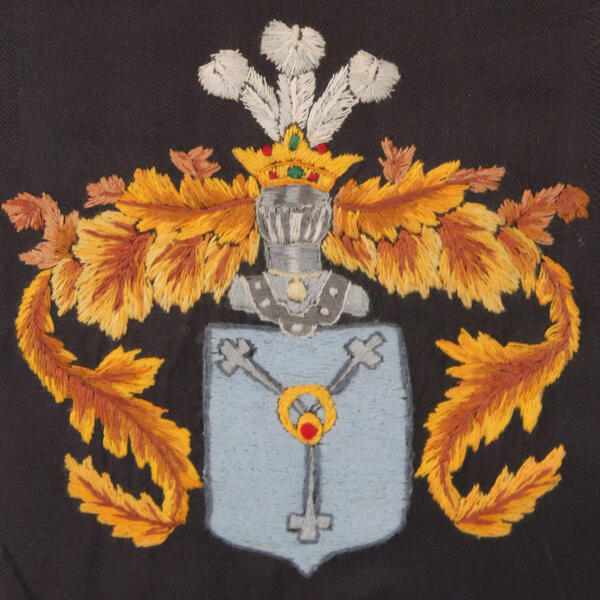
Embroidered emblem of Bunin’s family
#6
#7
According to the General Armorial, the emblem of the Bunin’s family looked like this: the basis of the emblem is a rectangular shield (the so-called French type, with a cusp point in the center of the bottom edge) with a blue field, in which there is a golden ring with semi-precious stone, surrounded by three silver oblong crosses, located with their pointed ends to the ring. The shield is crowned with a noble helmet and a crown decorated with ostrich feathers. The external decoration of the emblem is blue with a silver backing. It is believed that the emblem of the Bunin’s family is a slightly modified version of the family emblem of the Polish family BrOdzits. Indeed, according to the description included in the Armorial of the Kingdom of Poland, the emblem of BrOdzits family is only slightly different from the Bunin’s family emblem - by the color of the field (red instead of blue) and a simple ring instead of a signet-ring. Probably this similarity may prove the relationship between these families.
No in-depth studies of the meaning of the Bunin’s family emblem have been taken, which would be trustworthy and with any significant conclusions. It is known that the blue color in heraldry symbolizes loyalty, purity and greatness. Gold means justice, as well as nobility and wealth. The signet-ring in heraldry means honor and loyalty, as well as a sign of the goodwill of the sovereign. In general, all these symbols are quite consistent with the history of this noble family.
#8
Full name Embroidered emblem of Bunin’s family
Author Kononova Alexandra Nikolaevna
Date 1995 year
Technique damask stitch
Dimensions 22,5×16,5 cm
Collection Yelets Local History Museum
Copyright Yelets Local History Museum
Author Kononova Alexandra Nikolaevna
Date 1995 year
Technique damask stitch
Dimensions 22,5×16,5 cm
Collection Yelets Local History Museum
Copyright Yelets Local History Museum
#23
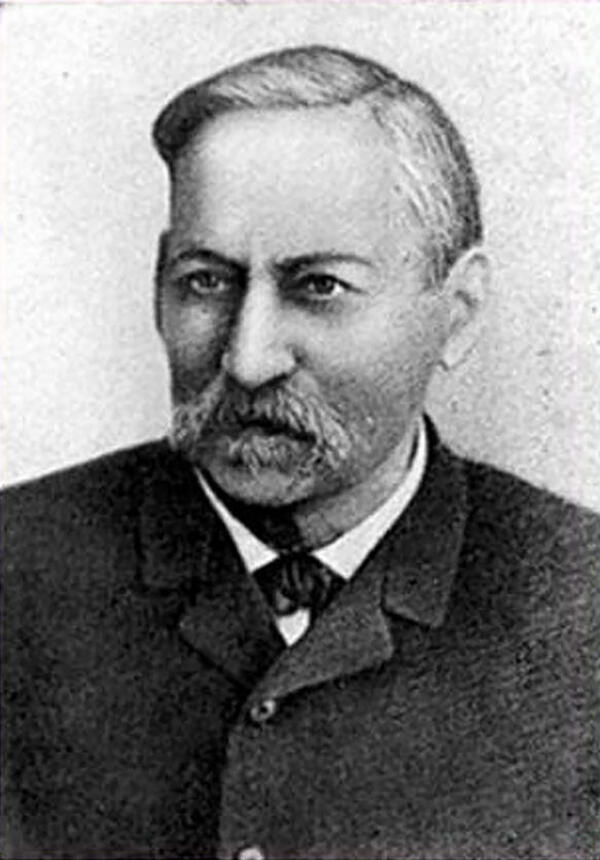
Bunin Alexey Nikolaevich. A photography
#9
#10
Alexey Bunin (1827-1906), father of the writer IvAn Bunin, was born in the village of KAmenka, Yeletsky Uezd. He spent one year studying at the Oryol Gymnasium, where one of his classmates was a future Russian writer Nikolay Leskov. When he was young, he served in the administrative office of the Oryol Noble Assembly, he started his service there on June 30, 1843. His service was rather short and not too successful, he only managed to have a rank of collegiate registrar, which was the first step in the Ranking Chart. During the Crimean war, as part of the 65th YelEts Squad, together with his brother Nikolai he participated in defending Sevastopol, where he met and became friends with Lev Tolstoy. After returning from a campaign in the Crimea, he married the daughter of a junior captain Alexander ChubArov, LyudmIla. He didn’t like farming and housework, and spent most of his time hunting and paying visits to his neighbors.
Recalling his early childhood, his first impressions about people around him, Ivan Bunin wrote about his father:
’… I noticed and felt my father, felt him being near me, I could also see him, strong, cheerful, careless, quick-tempered, but easily forgiving, generous, he could not stand people who were evil and vindictive. … he is always very lively before dinner and cheerful at the table; when he wakes up after dinner, he likes sitting by the open window and drink charmingly-sizzling and delicious fizzy water with acid and soda, and that he always suddenly catches me at this time, puts me on his lap, cuddles and kisses, and then just as suddenly he lets me go, not being fond of anything lasting.… I liked him, at times I felt joyful tenderness, I already loved him, his brave appearance, direct and changeable character - all these features corresponded to my forming taste, /…/ and he could play a guitar, he was so skillful, played so sincerely, and when necessary, in such a tempting manner, he played songs from some old, happy times…’
Bunin I.A. “Arseniev”s life”
“I inherited a lot from my father, for example, to speak and act fully sincerely in any case, regardless of the consequences, often causing anger and hatred from others. This comes from my father. /…/ He hated all kinds of lies, and especially self-serving, profitable lies; he spoke with disgust: “Only lackeys lie.”
Bunin I.A. “Political essays”
According to MargarIta GolItsyna, Bunin’s distant relative, AlexEy Bunin was taller than average, rather stout, with an open, cheerful pink face, and white-gray hair that ended in curls at the neck. He was always lively, cheerful, fast, played the guitar very well and sang Russian songs, and was very witty.
‘Nobody was ever punished in his house, even in the times of serfdom laws. No punishments were prescribed for children. There was a story told about him: once when he was angry, he took his eldest sons into the garden and demanded that they picked the rods for flogging, as they were supposed to be punished, but that was the end of the matter, the rods were broken, and their father let them go, saying that in the future they should be good boys’.
Muromtseva-Bunina V.N. ‘Bunin’s Life’
Recalling his early childhood, his first impressions about people around him, Ivan Bunin wrote about his father:
’… I noticed and felt my father, felt him being near me, I could also see him, strong, cheerful, careless, quick-tempered, but easily forgiving, generous, he could not stand people who were evil and vindictive. … he is always very lively before dinner and cheerful at the table; when he wakes up after dinner, he likes sitting by the open window and drink charmingly-sizzling and delicious fizzy water with acid and soda, and that he always suddenly catches me at this time, puts me on his lap, cuddles and kisses, and then just as suddenly he lets me go, not being fond of anything lasting.… I liked him, at times I felt joyful tenderness, I already loved him, his brave appearance, direct and changeable character - all these features corresponded to my forming taste, /…/ and he could play a guitar, he was so skillful, played so sincerely, and when necessary, in such a tempting manner, he played songs from some old, happy times…’
Bunin I.A. “Arseniev”s life”
“I inherited a lot from my father, for example, to speak and act fully sincerely in any case, regardless of the consequences, often causing anger and hatred from others. This comes from my father. /…/ He hated all kinds of lies, and especially self-serving, profitable lies; he spoke with disgust: “Only lackeys lie.”
Bunin I.A. “Political essays”
According to MargarIta GolItsyna, Bunin’s distant relative, AlexEy Bunin was taller than average, rather stout, with an open, cheerful pink face, and white-gray hair that ended in curls at the neck. He was always lively, cheerful, fast, played the guitar very well and sang Russian songs, and was very witty.
‘Nobody was ever punished in his house, even in the times of serfdom laws. No punishments were prescribed for children. There was a story told about him: once when he was angry, he took his eldest sons into the garden and demanded that they picked the rods for flogging, as they were supposed to be punished, but that was the end of the matter, the rods were broken, and their father let them go, saying that in the future they should be good boys’.
Muromtseva-Bunina V.N. ‘Bunin’s Life’
#11
Full name: Bunin Alexey Nikolaevich. A photography
Author: Goloschapov Boris Vladimirovich
Date: 1991year
Technique: photography
Dimensions: 39×29 cm
Collection: Yelets Local History Museum
Copyright: Yelets Local History Museum
Author: Goloschapov Boris Vladimirovich
Date: 1991year
Technique: photography
Dimensions: 39×29 cm
Collection: Yelets Local History Museum
Copyright: Yelets Local History Museum
#24
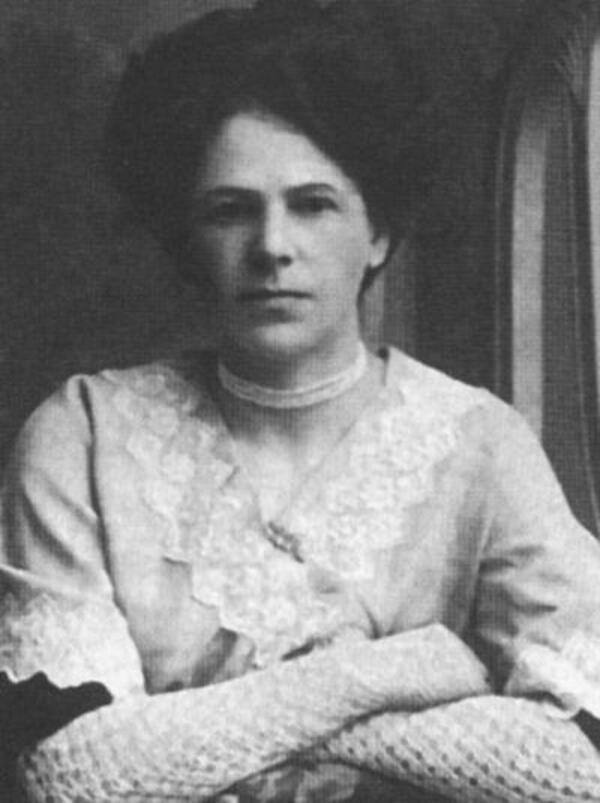
Bunina Maria Alekseevna. A photocopy
#12
#13
Maria AleksEevna Bunina (married name LaskarzhEvskaya) was the sister of Ivan Bunin. She was born in Voronezh on March 27, 1873, in the house in DvorYAnskaya street. It is believed that she was named after her mother’s sister Maria Alexandrovna, who died in 1867. In his conversations with IrIna OdoYEvtseva Ivan
Bunin often recalled his young days and was telling about his sister: “She was a pretty, dreamy, mild and graceful girl. She wasn”t a beauty, but still very attractive, slim, with radiant eyes. She was sixteen, and there was nobody around her to fall in love with, to be loved by. A real drama, you see. She spent hours sitting in front of the mirror and combing her hair, she was looking at herself at the mirror. She used to wear a colorful scarf around her head and lacy blouses that revealed her young breast. She smiled at me, made her eyes at me, and flirted openly with me, since there was no one else to flirt with. I praised her hair-do and the velvet ribbon around her neck, and this made her happy. She was so happy when I invited her to go for a walk with me or asked her to sing an old song to a guitar. And she blushed so prettily at my praises and compliments! The poems I wrote she learnt by heart, but she didn”t read anything else except them. She believed I was a star like Pushkin, at least not worse than him.”
Odoevtseva I.V. “On the Seine shores”
In 1898, Maria married Josef AdAmovich LaskarzhEvsky, who worked as an assistant engine driver at the railroad company. Their family lived in YefrEmov, KalUga, NovocherkAssk, GrYAzi, OrYOl. Her family life was not easy: financial trouble, hard childbirth, the death of a small daughter, her handsome husband used to have affairs with other women… Ivan AleksEevich had much compassion about his sister, supported her as much as he could.
Once he confessed to GalIna KuznetsOva: “I feel a kind of guilt for her. Life is a mystery, life is horrible. I took once the Caucasian Express train to Baku, and it is really luxurious - not even English Queen has a train like this: huge windows, iron-cladded walls, yellow leather seats in the first class… and here is the GrYAzi station. I get off the train, Masha”s husband comes to greet me… and so we come into their house… And there is Masha, nervous, thin, constantly smoking, and two children, miserably looking, with big ears, like poor kittens. And their mom lives with them… Ah, life is horrible! … Still there were things that made it not as horrible. During the day Masha was usually cheerful, singing, and in the evening I used to buy a lot of different stuff - wine, cheese, great sardines, she was drinking wine, then she took the guitar, wrapped herself in a warm and mild shawl and started singing something, like our father did. She was really talented…”
Kuznetsova G.N. “Grasse diary”
Bunin often recalled his young days and was telling about his sister: “She was a pretty, dreamy, mild and graceful girl. She wasn”t a beauty, but still very attractive, slim, with radiant eyes. She was sixteen, and there was nobody around her to fall in love with, to be loved by. A real drama, you see. She spent hours sitting in front of the mirror and combing her hair, she was looking at herself at the mirror. She used to wear a colorful scarf around her head and lacy blouses that revealed her young breast. She smiled at me, made her eyes at me, and flirted openly with me, since there was no one else to flirt with. I praised her hair-do and the velvet ribbon around her neck, and this made her happy. She was so happy when I invited her to go for a walk with me or asked her to sing an old song to a guitar. And she blushed so prettily at my praises and compliments! The poems I wrote she learnt by heart, but she didn”t read anything else except them. She believed I was a star like Pushkin, at least not worse than him.”
Odoevtseva I.V. “On the Seine shores”
In 1898, Maria married Josef AdAmovich LaskarzhEvsky, who worked as an assistant engine driver at the railroad company. Their family lived in YefrEmov, KalUga, NovocherkAssk, GrYAzi, OrYOl. Her family life was not easy: financial trouble, hard childbirth, the death of a small daughter, her handsome husband used to have affairs with other women… Ivan AleksEevich had much compassion about his sister, supported her as much as he could.
Once he confessed to GalIna KuznetsOva: “I feel a kind of guilt for her. Life is a mystery, life is horrible. I took once the Caucasian Express train to Baku, and it is really luxurious - not even English Queen has a train like this: huge windows, iron-cladded walls, yellow leather seats in the first class… and here is the GrYAzi station. I get off the train, Masha”s husband comes to greet me… and so we come into their house… And there is Masha, nervous, thin, constantly smoking, and two children, miserably looking, with big ears, like poor kittens. And their mom lives with them… Ah, life is horrible! … Still there were things that made it not as horrible. During the day Masha was usually cheerful, singing, and in the evening I used to buy a lot of different stuff - wine, cheese, great sardines, she was drinking wine, then she took the guitar, wrapped herself in a warm and mild shawl and started singing something, like our father did. She was really talented…”
Kuznetsova G.N. “Grasse diary”
Maria Alekseevna died on November 3, 1930 in Rostov-on-Don, from tuberculosis.
#14
Full name: Bunina Maria Alekseevna. A photocopy
Author: Goloschapov Boris Vladimirovich
Date: 1991 year
Technique: photography
Dimensions: 25×30 cm
Collection: Yelets Local History Museum
Copyright: Yelets Local History Museum
Author: Goloschapov Boris Vladimirovich
Date: 1991 year
Technique: photography
Dimensions: 25×30 cm
Collection: Yelets Local History Museum
Copyright: Yelets Local History Museum
#25
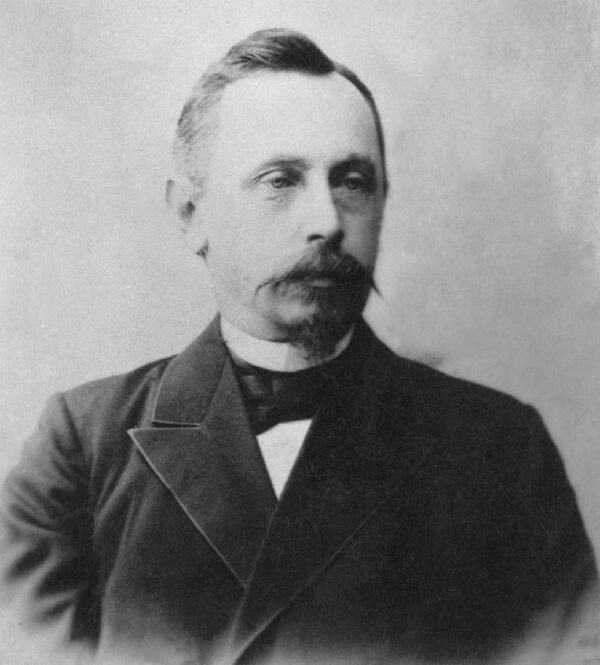
Bunin Evgeny Alekseevich. A photocopy
#15
#16
Evgeny Alekseevich Bunin was a brother of the writer. He was also born in the village of Kamenka. He graduated from a private boarding school in Yelets and studied at the Voronezh gymnasium.
‘He did not have any education, he spent his youth in the countryside; one of his natural talents was his imaginative way of thinking, good observation skills, and common sense. While he was young, he was quite careless like many other men in the Bunin’s family, but as he grew older and saw the farm going to wreck, he realized that it was impossible for his father to change, and in the future there was the risk of going bankrupt. He was 26 years old when he decided to get married. He married and chose a wife who didn’t come from a noble family, he needed a really hard-working and strong woman to support him in making his way in life. He used to say: “If you cut trees, choose the one you are able to cut”… In about 2 years after the wedding they opened their own small shop, and after 7 years they managed to buy an estate’.
Muromtseva-Bunina V.N. ‘Bunin’s Life’
In 1893 Evgeny bought his father’s former estate in Ognyovka. Everything in this estate was put right. He worked really hard together with his wife, and the result was excellent: they had the richest harvest in the area. His famous brother also often visited him at his estate. In late 1906, after the peasant riots, Yevgeny AleksEevich sold his estate and moved to YefrEmov, where he bought a house. He worked at the local excise office. Recalling the day when she first met EvgEny AleksEevich, Vera Nikolaevna Muromtseva wrote:
‘The door opened, and a plump, big-bellied, elderly man came in and looked at me carefully with his light blue eyes, his face resembled his older brother’s YUly face. I instantly guessed that it was EvgEny AleksEevich. I knew pretty much about him, as I was told a lot about his person; I knew that he abandoned his artistic skills and fully immersed himself in the agricultural activities; he was a good farmer, farming was his passion; actually he was a passionate person, with his own original way of thinking, who had always lived his own life which was not like other people’s, he spent his time farming, making portraits and writing novels’.
Muromtseva-Bunina V.N. ‘Bunin’s Life’
But his literary intuition was amazing, and he could easily say who was the author of the work, making his conclusion by the style of writing. In 1909 when he was working on the story “Village”, Bunin talked a lot about that with his relatives, he said he wanted to write a long story. He knew much about the country life. Evgeny AleksEevich was telling him a lot of horrible stories. He shared with Jan his impressions about the life in OgnYOvka, recalled the peasant men, their cruel treatment with their wives. Evgeny AleksEevich had a lot of interesting observations to share. He was telling his stories figuratively, sometimes with humor.
He had his children, Arseniy and Margarita, only in advanced maturity, their mother was a peasant woman from the village of KrOpotovo, Natalia Andreevna, who served as their housekeeper. He gave his name to these children. After the revolution, Yevgeny AleksEevich was forced to leave his own house in YefrEmov and lived with his family on the outskirts of the city in a shack with an earthen floor. He earned his living by giving drawing lessons at one of the schools. On the way back home from the village where he tried to get some bread in exchange of this belongings and clothes, he froze in the street. He was buried near his wife’s and mother’s tombs, at YefrEmov cemetery, in a box made of old planks.
‘He did not have any education, he spent his youth in the countryside; one of his natural talents was his imaginative way of thinking, good observation skills, and common sense. While he was young, he was quite careless like many other men in the Bunin’s family, but as he grew older and saw the farm going to wreck, he realized that it was impossible for his father to change, and in the future there was the risk of going bankrupt. He was 26 years old when he decided to get married. He married and chose a wife who didn’t come from a noble family, he needed a really hard-working and strong woman to support him in making his way in life. He used to say: “If you cut trees, choose the one you are able to cut”… In about 2 years after the wedding they opened their own small shop, and after 7 years they managed to buy an estate’.
Muromtseva-Bunina V.N. ‘Bunin’s Life’
In 1893 Evgeny bought his father’s former estate in Ognyovka. Everything in this estate was put right. He worked really hard together with his wife, and the result was excellent: they had the richest harvest in the area. His famous brother also often visited him at his estate. In late 1906, after the peasant riots, Yevgeny AleksEevich sold his estate and moved to YefrEmov, where he bought a house. He worked at the local excise office. Recalling the day when she first met EvgEny AleksEevich, Vera Nikolaevna Muromtseva wrote:
‘The door opened, and a plump, big-bellied, elderly man came in and looked at me carefully with his light blue eyes, his face resembled his older brother’s YUly face. I instantly guessed that it was EvgEny AleksEevich. I knew pretty much about him, as I was told a lot about his person; I knew that he abandoned his artistic skills and fully immersed himself in the agricultural activities; he was a good farmer, farming was his passion; actually he was a passionate person, with his own original way of thinking, who had always lived his own life which was not like other people’s, he spent his time farming, making portraits and writing novels’.
Muromtseva-Bunina V.N. ‘Bunin’s Life’
But his literary intuition was amazing, and he could easily say who was the author of the work, making his conclusion by the style of writing. In 1909 when he was working on the story “Village”, Bunin talked a lot about that with his relatives, he said he wanted to write a long story. He knew much about the country life. Evgeny AleksEevich was telling him a lot of horrible stories. He shared with Jan his impressions about the life in OgnYOvka, recalled the peasant men, their cruel treatment with their wives. Evgeny AleksEevich had a lot of interesting observations to share. He was telling his stories figuratively, sometimes with humor.
He had his children, Arseniy and Margarita, only in advanced maturity, their mother was a peasant woman from the village of KrOpotovo, Natalia Andreevna, who served as their housekeeper. He gave his name to these children. After the revolution, Yevgeny AleksEevich was forced to leave his own house in YefrEmov and lived with his family on the outskirts of the city in a shack with an earthen floor. He earned his living by giving drawing lessons at one of the schools. On the way back home from the village where he tried to get some bread in exchange of this belongings and clothes, he froze in the street. He was buried near his wife’s and mother’s tombs, at YefrEmov cemetery, in a box made of old planks.
#17
Full name: Bunin Evgeny Alekseevich. A photocopy
Author: Goloschapov Boris Vladimirovich
Date: 1991 year
Technique: photography
Dimensions: 27×23 cm
Collection: Yelets Local History Museum
Copyright: Yelets Local History Museum
Author: Goloschapov Boris Vladimirovich
Date: 1991 year
Technique: photography
Dimensions: 27×23 cm
Collection: Yelets Local History Museum
Copyright: Yelets Local History Museum
#26
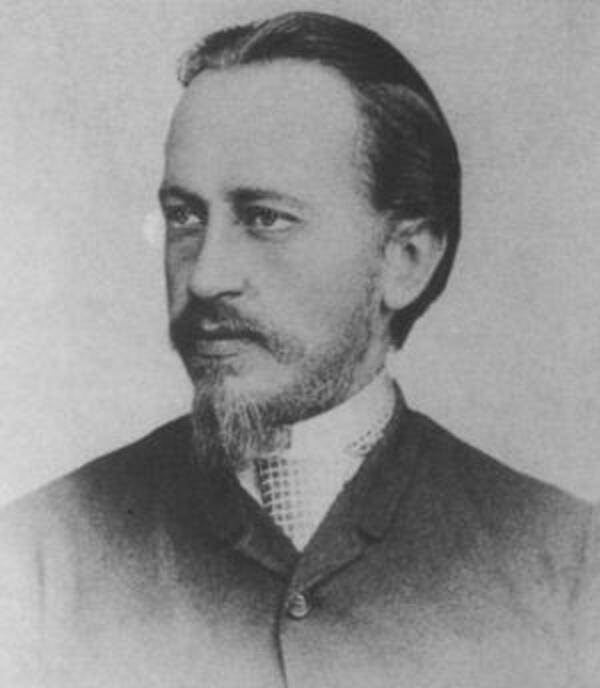
Bunin Yuly Alekseevich. A photocopy
#18
#19
Yuly Bunin was Ivan’s elder brother, belonging to the community calling themselves “narodniki” (which means those who support the interest of simple folks - “narod” in Russian), a literary and public figure. He was born in the town of Usman, in Tambov Governorate, which his parents were passing through in transit. He got his primary education at a private boarding school in Yelets, then he studied at the Voronezh Gymnasium from which he graduated with a golden medal. He was also a student at the Moscow university from which he was expelled for his participation in a revolutionary society. He finished his course at the Kharkov University. Yuly spent the summer of 1884 with false documents in Pyatigorsk and Kislovodsk. When he returned from the Caucasus, he was arrested in his father’s estate in Ozyorki. He spent a year in a prison in KhArkov and from there he was sent to his parents’ estate in Yeletsky district to spend three years there. He worked in Khrkov, Poltava, Moscow.
“When I got acquainted with Bunin”s family, Yuly was 48. At that time he was still a very young man, very cheerful, but he quickly got confused as soon as things went wrong. His public activities, writing articles for the magazine and newspaper - all this work was like a duty for him, but his true passion was literature. I think there are only few people among us, Russians, who knew so much about the Russian literature… He had incredibly correct literary intuition. He never wrote any literary work, but he was so well aware of all the things related to this field of activities. Yuly”s literary intuition was highly appreciated and recognized by all the writers who knew him, so he was a forever chairman of the “Old Wednesday” and the chairman of the “Young Wednesday”. He was also the chairman of the secondary commission in the Literary and Artistic community, and in his later years he was one of the editors at the “Writers” Publishing House’ in Moscow.’
Muromtseva-Bunina V.N. According to her diary on October 7, 1921 year, from the book “Stories from the Bunins”
Yuly Bunin died in Moscow, according to Ivan Bunin, his death was caused by “hunger and cold”. He was buried at the cemetery at the Donskoy monastery.
Yuly AleksEevich had a huge influence on the development of his younger brother’s talent, and was an unquestionable authority for him.
‘Obituary in “General case of Potresov - Yablonovsky. He wrote well, intelligently, showing great expect to Yuly AleksEevich… It sounds very correct that what Yuly AleksEevich was doing could be compared with the trees, which one couldn”t see the wood (meaning his personality) for… He mentioned his exceptional love and friendship to Jan. But he did not mention how much he did for Jan… They used to talk so much, discussing everything that appeared in literature and in public life, and their conversations from the earliest years contributed so much to the development of Jan”s personality. It helped him not to waste his talent. From the very beginning he had somebody to explain to him what was good, and what was the devil”s works.”
Muromtseva-Bunina V.N. According to the diary, recorded on December 22, 1921, from the book “Stories from the Bunins”
Muromtseva-Bunina V.N. According to her diary on October 7, 1921 year, from the book “Stories from the Bunins”
Yuly Bunin died in Moscow, according to Ivan Bunin, his death was caused by “hunger and cold”. He was buried at the cemetery at the Donskoy monastery.
Yuly AleksEevich had a huge influence on the development of his younger brother’s talent, and was an unquestionable authority for him.
‘Obituary in “General case of Potresov - Yablonovsky. He wrote well, intelligently, showing great expect to Yuly AleksEevich… It sounds very correct that what Yuly AleksEevich was doing could be compared with the trees, which one couldn”t see the wood (meaning his personality) for… He mentioned his exceptional love and friendship to Jan. But he did not mention how much he did for Jan… They used to talk so much, discussing everything that appeared in literature and in public life, and their conversations from the earliest years contributed so much to the development of Jan”s personality. It helped him not to waste his talent. From the very beginning he had somebody to explain to him what was good, and what was the devil”s works.”
Muromtseva-Bunina V.N. According to the diary, recorded on December 22, 1921, from the book “Stories from the Bunins”
#20
Full name: Bunin Yuly Alekseevich. A photocopy
Author: Goloschapov Boris Vladimirovich
Date: 1991 year
Technique: photography
Dimensions: 27×23 cm
Collection: Yelets Local History Museum
Copyright: Yelets Local History Museum
Author: Goloschapov Boris Vladimirovich
Date: 1991 year
Technique: photography
Dimensions: 27×23 cm
Collection: Yelets Local History Museum
Copyright: Yelets Local History Museum
read morehide
00:00
00:00
1x
Bunin family photos, Bunin coat of arms
Collection
Exhibition
3
 Point your smartphone camera to open in the app
Open in app
Share