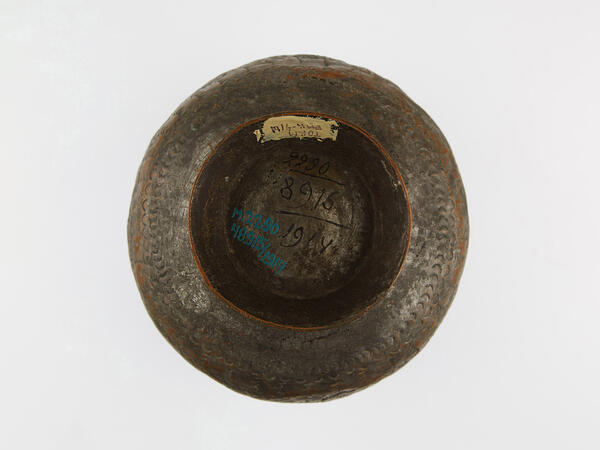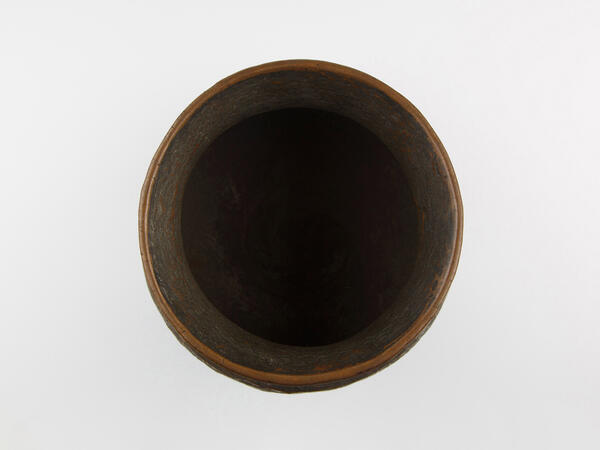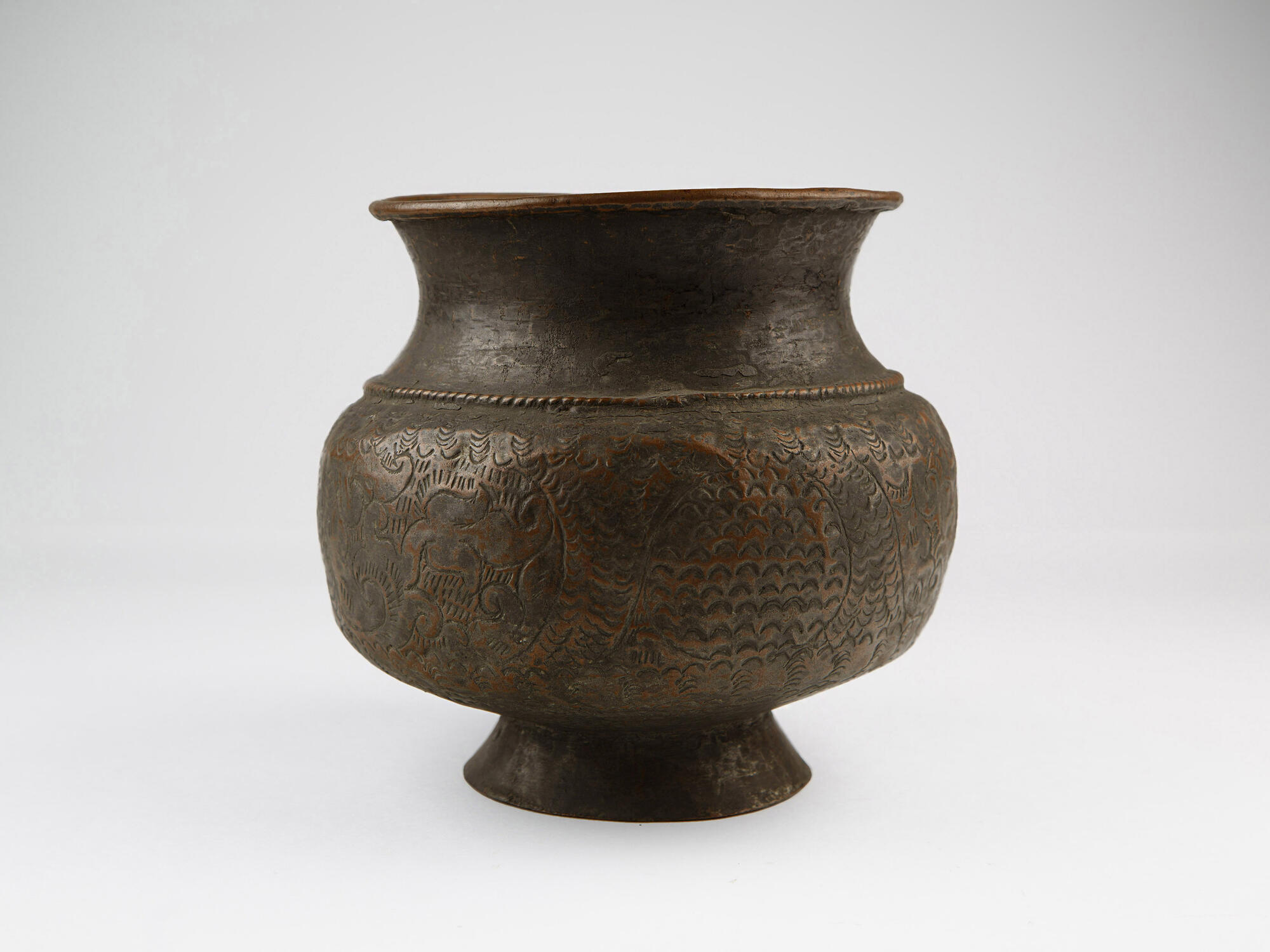


In the 18th century, the Demidov factories produced not only tableware that met the requirements of the new way of life (teapots, tea caddies, coffee pots, etc.), but also preserved traditional kinds of tableware of the pre-Petrine times. The bratina cup from the museum’s collection is one of the examples of Old Russian tableware.
In Rus, a round bowl for alcoholic beverages was called a “bratina”. It was traditionally used for serving drinks at all-village “bratchina-feasts” where everybody had to bring something to the table. Such feasts were most often arranged on church holidays: Christmas, Intercession, the Day of St. Nicholas the Wonderworker. Sometimes they were held as meetings, where all adult residents of the village gathered together to discuss and find solutions for community issues. Once the toast to health was proclaimed, the cup was passed around. However people rarely drank directly from it — honey, kvass or beer were usually drawn with a small ladle. Women were usually served small cups called “bratinki” — it was allowed to drink directly from these cups taking turns, without ladles or mugs. Sometimes such vessels were used at wake ceremonies. They were filled with “syta” — water mixed with honey, which, according to Slavic lore, served as “treats” for the souls of ancestors. The bowl with the syta drink was left on the grave. Villagers had wooden or copper bratinas, and the royal family and rich city folk used ones of gold and silver.
To make such a vessel, a blacksmith would first forge a spherical workpiece from copper sheets, then he would give it the shape of the future cup with a special hammer. This method of processing was called planishing. The sides of the bratina were round and convex. It was noticeably narrowed at the neck to prevent the contents from spilling. A small downward expanding foot was attached to the bottom to make the cup more stable. The finished cup was tinned — coated inside and out with a thin layer of molten tin.
Bratina cups were festive cups and considered to be valuable — this is why they were always richly decorated. Wooden cups were painted or decorated with carved patterns, and metal ones were stamped with ornaments and inscriptions. Products made in the Demidov workshops of the Urals featured patterns and designs from printed books of Old Believers. From the 1730s, Ural factories, including the Demidov factories, produced huge quantities of copper tableware. Before that, such kitchenware was brought to the Urals from the European part of Russia and was highly valued. Copper products made in the Urals were purchased in large quantities by the locals, exported to Moscow and St. Petersburg and even sold abroad.