

#1
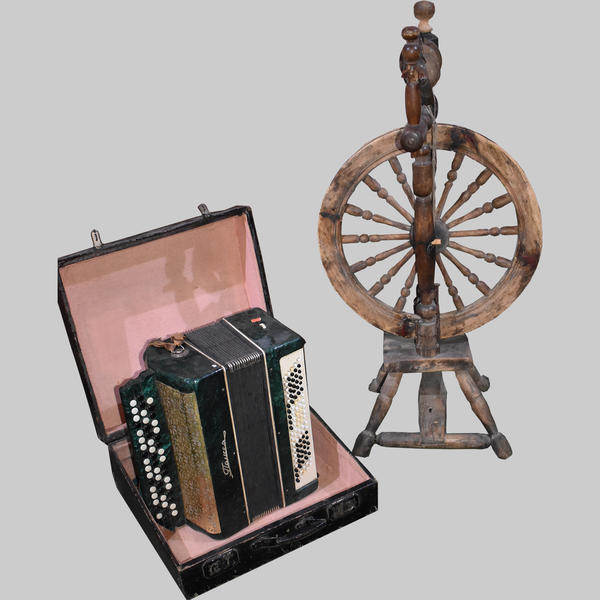
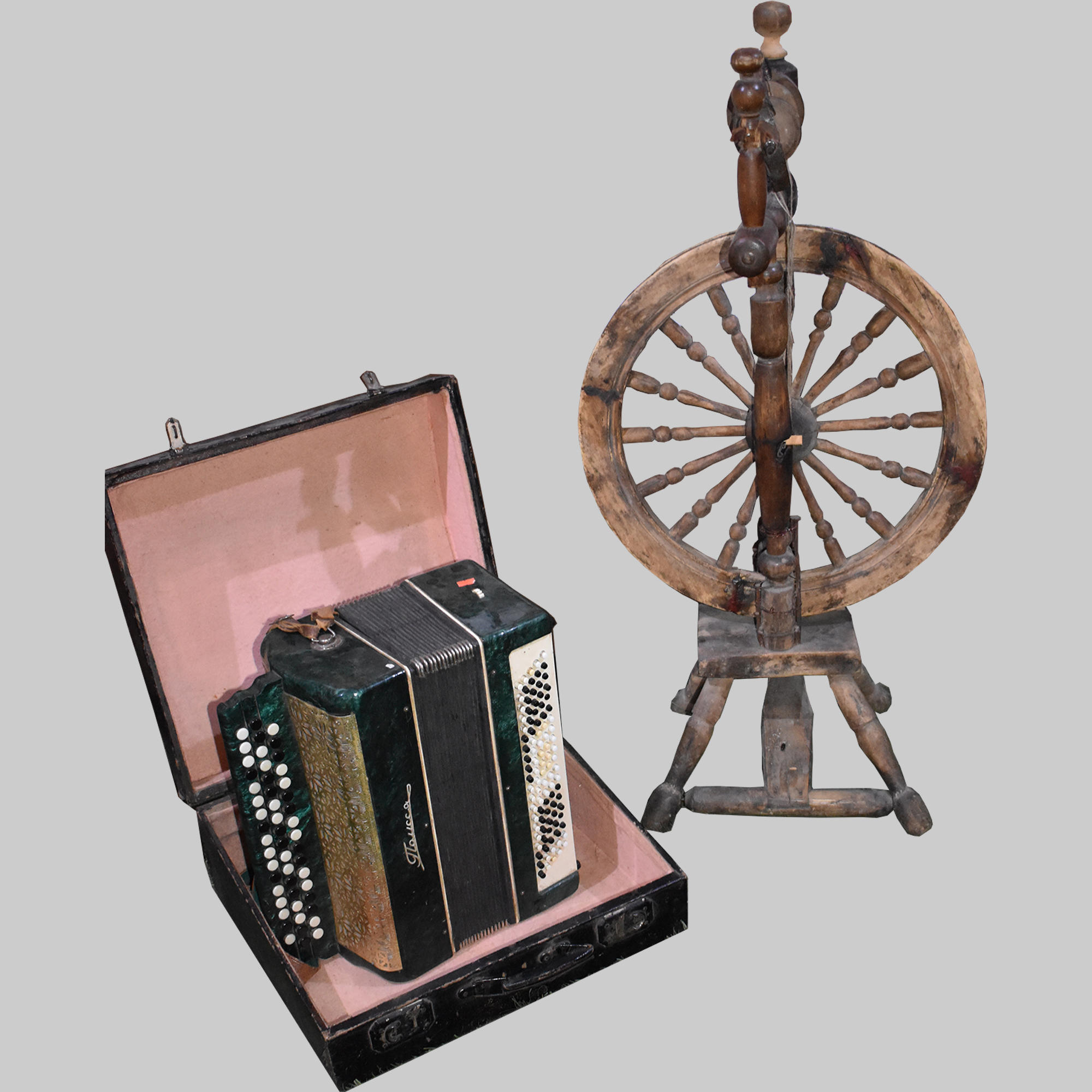
Bayan Polesie, Spinning Wheel of the 19th Centur
#2
#4
#5
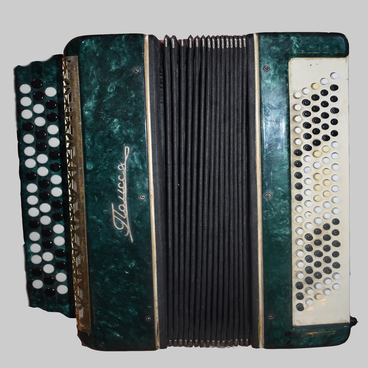
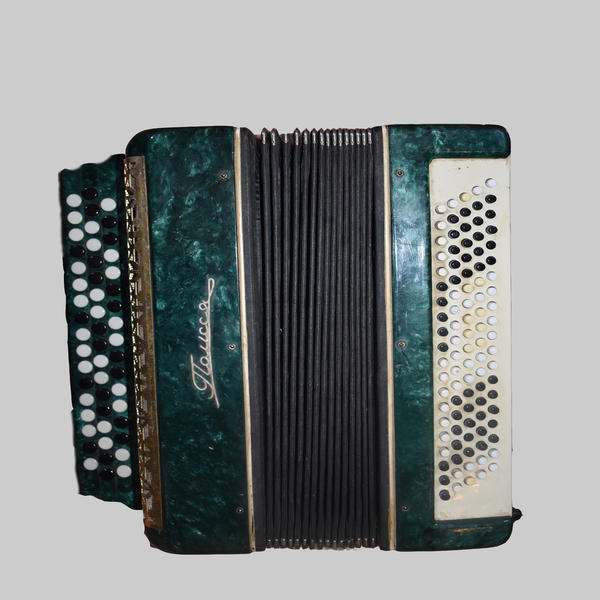
Bayan is a Russian musical instrument classed as a perfect harmonic. For the first time the name ‘bayan’ appeared in concert announcements dated back to 1891, before then such instruments were exclusively called harmonics.
Historians suggest that harmonics evolved from an instrument called ‘sheng’ widely used in Asia and appeared in Russia during the time of Tatar-Mongolian rule. This unusual instrument soon reached Europe, where it underwent some design changes and quickly rose to popularity.
In Russia, harmonics gained popularity only in the 19th century, when famous manufacturer and gunsmith Ivan Evstratievich Sizov (1793–1855) bought a German single-row accordion at a fair in Nizhny Novgorod. Upon returning home, he made a copy whose sound quality was on par with that of the foreign original, and then opened a workshop specialising in production of harmonics.
The first factory production of new musical instruments for Russia was launched in the 1840s in Tula. The factory belonged to Timofey Pimenovich Vorontsov (1787-1854) and produced about 10000 instruments annually. By mid-19th century, harmonics had become a truly national instrument, not a single Russian gathering was good enough without it. Subsequently, many harmonics workshops emerged in Russia, each trying to bring something of their own to the instrument, so today there is a large number of harmonics that differ in sound scale and appearance. The first harmonics were produced in Tula and had one row of buttons on each side.
This principle has been preserved in the production of small concertos, called ‘turtles’.
Following the Tula masters’ footsteps, harmonics producers in Saratov established their own businesses. Local craftsmen added bells to the construction of the instrument, which the people loved Saratov harmonics for. Vyatka handicraftsmen, who also did their best, did not stand aside, making the design more complex with additional buttons for each hand. The new instrument was called the Vyatka accordion.
All the musical instruments mentioned were single-row and differed in sound that was played when a button was pressed to compress and unclench bellows. Single-row harmonics were called talyanki and had two systems: Russian and German. Double-row accordions came to Russia from Europe which got the name “Russian wreaths”. They are now very rare, since in the 20th century they were replaced by more modern lamenesses.
The button accordion was first designed by Peter Egorovich Sterligov for harmonist Yakov Orlansky-Titarenko. The instrument was named in honour of an old Russian singer and storyteller Boyan.
Historians suggest that harmonics evolved from an instrument called ‘sheng’ widely used in Asia and appeared in Russia during the time of Tatar-Mongolian rule. This unusual instrument soon reached Europe, where it underwent some design changes and quickly rose to popularity.
In Russia, harmonics gained popularity only in the 19th century, when famous manufacturer and gunsmith Ivan Evstratievich Sizov (1793–1855) bought a German single-row accordion at a fair in Nizhny Novgorod. Upon returning home, he made a copy whose sound quality was on par with that of the foreign original, and then opened a workshop specialising in production of harmonics.
The first factory production of new musical instruments for Russia was launched in the 1840s in Tula. The factory belonged to Timofey Pimenovich Vorontsov (1787-1854) and produced about 10000 instruments annually. By mid-19th century, harmonics had become a truly national instrument, not a single Russian gathering was good enough without it. Subsequently, many harmonics workshops emerged in Russia, each trying to bring something of their own to the instrument, so today there is a large number of harmonics that differ in sound scale and appearance. The first harmonics were produced in Tula and had one row of buttons on each side.
This principle has been preserved in the production of small concertos, called ‘turtles’.
Following the Tula masters’ footsteps, harmonics producers in Saratov established their own businesses. Local craftsmen added bells to the construction of the instrument, which the people loved Saratov harmonics for. Vyatka handicraftsmen, who also did their best, did not stand aside, making the design more complex with additional buttons for each hand. The new instrument was called the Vyatka accordion.
All the musical instruments mentioned were single-row and differed in sound that was played when a button was pressed to compress and unclench bellows. Single-row harmonics were called talyanki and had two systems: Russian and German. Double-row accordions came to Russia from Europe which got the name “Russian wreaths”. They are now very rare, since in the 20th century they were replaced by more modern lamenesses.
The button accordion was first designed by Peter Egorovich Sterligov for harmonist Yakov Orlansky-Titarenko. The instrument was named in honour of an old Russian singer and storyteller Boyan.
#6
Full name: Bayan “Polesye”
Date: 19th century
Date: 19th century
Dimensions: 50 cm
Collection: Boguchar District Museum of Local History
Copyright: Boguchar District Museum of Local History
Goskatalog Number: 18286749
Collection: Boguchar District Museum of Local History
Copyright: Boguchar District Museum of Local History
Goskatalog Number: 18286749
#3
19th century spinning wheel
#7
#8
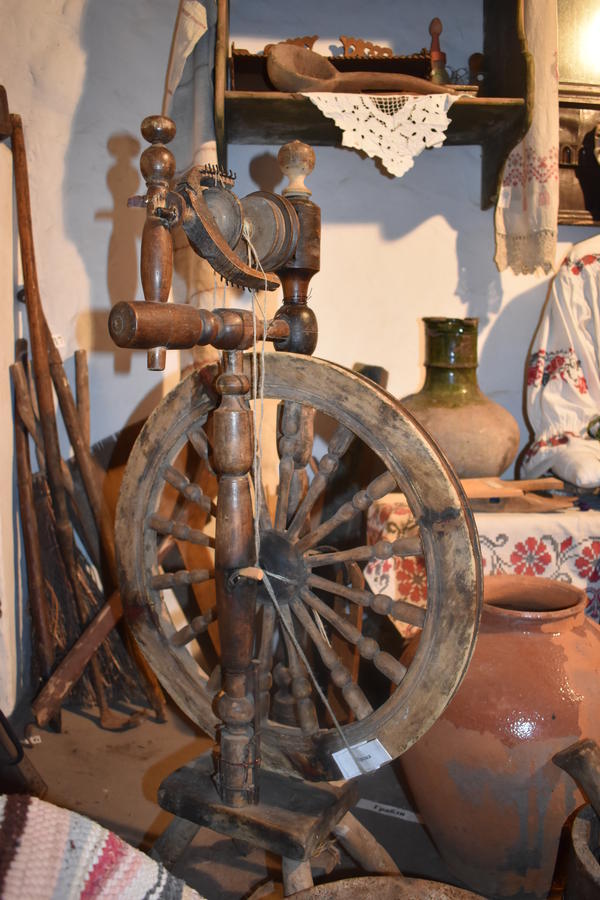
The spinning wheel is a device used for making threads. Women who spun were called spinners. In Russia, they traditionally used primitive manual distaves: with a reed – in the South, with a board – in the Urals and in Northern areas. With a distaff, even the most experienced craftswomen, working from dawn far into the night, could not spin more than 300 meters of thread. This amount was only enough to weave 22.5 cm of cloth.
In 1530, Braunschweig master Jurgens invented a hand spinning wheel with a treadle. The new device allowed to double the spinner’s productivity. The spinning wheel presented here is called Russian spinning wheel, or stoyak (vertical spinning wheel). Another variety of the device is Chukhon (Finnish) spinning wheel, or lezhak (horizontal spinning wheel).
First hand spinning wheels found their way to Russia in the 18th century. They were quite expensive, by far not every family could afford this device. So, even at the beginning of the last century, people in villages often used distaves. A woman owning a hand spinning wheel would keep it as the apple of her eye. The tool was passed from mother to daughter, there were cases when a hand spinning wheel served faithfully 3-4 generations of craftswomen, for more than 100 years.
Until the beginning of the 20th century, spinning skill was considered one of the main merits of a woman. The house of a village girl who had gained notoriety as a “non-spinner” and “non-weaver” was avoided by suitors like the plague. When a girl was born in the family, the umbilical cord was cut with a spindle: they believed that this would help her to become a good spinner. And to make sure that the baby was keen on handcraft, they put a pryaslen into her cradle – a little stone used to fix the yarn on the hand spinning wheel.
Approximately from the age of 5, they started to teach the girl to spin. On the wedding day, next to the skin under her shirt, the bride was bound by the first thread spun by her: they believed that there was no surer remedy against the evil eye. At that time, girls were given in marriage early – at the age of 15-16. Before marriage, a girl had to spin and weave so much material for it to be enough both for her dower and gifts to future relatives. Because of that, young craftswomen spent a considerable amount of their time sitting at the spinning wheel.
In the long winter evenings, girls span with a wicker lamp. Due to the constant contact with the thread, the skin on the finger tips became very dry, and the craftswoman had to moisture it with saliva from time to time. To make sure that there always be saliva in the mouth, they put a bowl with sour berries or highbush cranberries next to the spinning wheel.
During paganism, goddess Makosh was considered to be the patron of craftswomen, including spinners. After adoption of Christianity, the pagan deity was substituted in the people’s mind by St Paraskeva Pyatnitsa (Pyatnitsa means Friday). People believed that, if a spinner, weary from the day’s work, started dozing off, Paraskeva would continue spinning instead of her.
But the saint severely punished those who span on her holy day – Friday. To propitiate Paraskeva Pyatnitsa, once a year, women performed the mokritsa ritual: offered a sacrifice by throwing yarn and tow into the well. Yarn and tow were believed to be the favorite toys of the devilry. To prevent evil spirits from entangling the tow at night, women whispered a protective incantation over the spinning wheel before going to bed.
In 1530, Braunschweig master Jurgens invented a hand spinning wheel with a treadle. The new device allowed to double the spinner’s productivity. The spinning wheel presented here is called Russian spinning wheel, or stoyak (vertical spinning wheel). Another variety of the device is Chukhon (Finnish) spinning wheel, or lezhak (horizontal spinning wheel).
First hand spinning wheels found their way to Russia in the 18th century. They were quite expensive, by far not every family could afford this device. So, even at the beginning of the last century, people in villages often used distaves. A woman owning a hand spinning wheel would keep it as the apple of her eye. The tool was passed from mother to daughter, there were cases when a hand spinning wheel served faithfully 3-4 generations of craftswomen, for more than 100 years.
Until the beginning of the 20th century, spinning skill was considered one of the main merits of a woman. The house of a village girl who had gained notoriety as a “non-spinner” and “non-weaver” was avoided by suitors like the plague. When a girl was born in the family, the umbilical cord was cut with a spindle: they believed that this would help her to become a good spinner. And to make sure that the baby was keen on handcraft, they put a pryaslen into her cradle – a little stone used to fix the yarn on the hand spinning wheel.
Approximately from the age of 5, they started to teach the girl to spin. On the wedding day, next to the skin under her shirt, the bride was bound by the first thread spun by her: they believed that there was no surer remedy against the evil eye. At that time, girls were given in marriage early – at the age of 15-16. Before marriage, a girl had to spin and weave so much material for it to be enough both for her dower and gifts to future relatives. Because of that, young craftswomen spent a considerable amount of their time sitting at the spinning wheel.
In the long winter evenings, girls span with a wicker lamp. Due to the constant contact with the thread, the skin on the finger tips became very dry, and the craftswoman had to moisture it with saliva from time to time. To make sure that there always be saliva in the mouth, they put a bowl with sour berries or highbush cranberries next to the spinning wheel.
During paganism, goddess Makosh was considered to be the patron of craftswomen, including spinners. After adoption of Christianity, the pagan deity was substituted in the people’s mind by St Paraskeva Pyatnitsa (Pyatnitsa means Friday). People believed that, if a spinner, weary from the day’s work, started dozing off, Paraskeva would continue spinning instead of her.
But the saint severely punished those who span on her holy day – Friday. To propitiate Paraskeva Pyatnitsa, once a year, women performed the mokritsa ritual: offered a sacrifice by throwing yarn and tow into the well. Yarn and tow were believed to be the favorite toys of the devilry. To prevent evil spirits from entangling the tow at night, women whispered a protective incantation over the spinning wheel before going to bed.
#9
Full name: 19th century spinning wheel
Date: 19th century
Dimensions: 70 cm
Collection: Boguchar District Museum of Local History
Copyright: Boguchar District Museum of Local History
Goskatalog Number: 18286759
Date: 19th century
Dimensions: 70 cm
Collection: Boguchar District Museum of Local History
Copyright: Boguchar District Museum of Local History
Goskatalog Number: 18286759
read morehide
00:00
00:00
1x
Bayan Polesie, Spinning Wheel of the 19th Centur
Exhibition
0
 Point your smartphone camera to open in the app
Open in app
Share