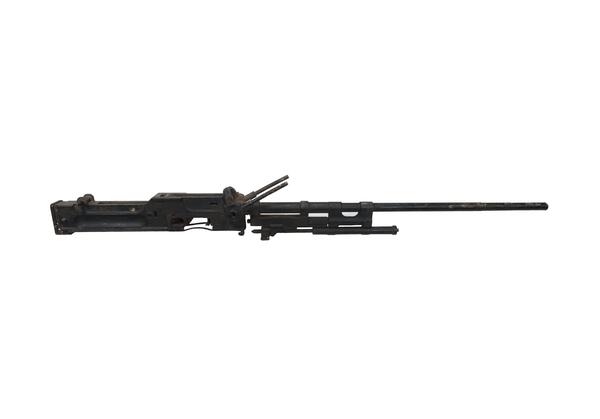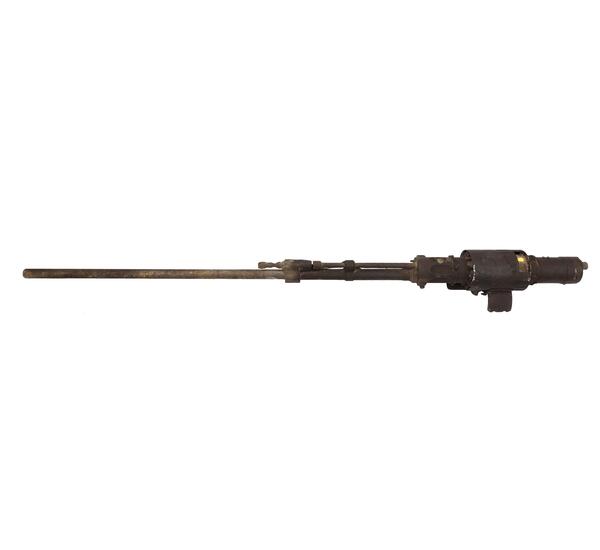
In the Soviet Union, one of the most famous aircraft guns was the ShVAK 20mm autocannon (Shpitalny-Vladimirov large-caliber aircraft-mounted cannon). It was fitted on a large number of aircraft from the Polikarpov I-16 to the Lavochkin La-7, and was installed as part of the turrets on the Petlyakov Pe-8 and Yermolayev Yer-2 bombers. This gun was mainly used to arm Soviet fighter aircraft.
The ShVAK cannon entered service in 1936 and was produced until 1946, when the last 754 guns of this type were assembled. There were four versions of this gun: it could be wing-mounted or turret-mounted, engine-mounted and fuselage-mounted with synchronization gear. The type that was fitted between engine cylinder banks had a longer barrel and a shock absorber. In the summer of 1936, it was presented to the Air Force Research Institute for state field tests. It took about four years to complete its development. Only in 1940 it became possible to use the ShVAK cannon designed by Shpitalny and Vladimirov in Soviet fighters. The aircraft autocannon was first used in action in 1939. The ShVAK guns were mounted on the I-16 fighter aircraft, which were used in the Battles of Khalkhin Gol against the Japanese.
The cannon was the main part of ordnance in the Soviet Yak and LaGG fighters. The wing-mounted version was also used in the first Il-2 attack aircraft with ammunition of 200 shells per barrel. The beginning of the Great Patriotic War spurred both the mass production of 20-millimeter ShVAK guns and the introduction of the version with synchronization gear. It first appeared in 1942 Lavochkin fighters, and was fitted on some variants of the MiG-3 fighter.
In 1942, which was a difficult year for the entire country, Soviet enterprises were able to produce 34,601 aircraft guns of this type. The ShVAK gun was manufactured at the Tula Arms Plant, Kovrov Arms Plant and Izhevsk Mechanical Plant. In total, taking into account the pre-war releases, more than 100,000 units of ShVAK 20mm aircraft cannon were manufactured in the USSR. Its slightly modified version was also used for arming light tanks, for example, the mass-produced T-60 tank. Given the volume of production and use of this artillery system, it is rightly referred to as a “weapon of Victory”.
The ShVAK cannon entered service in 1936 and was produced until 1946, when the last 754 guns of this type were assembled. There were four versions of this gun: it could be wing-mounted or turret-mounted, engine-mounted and fuselage-mounted with synchronization gear. The type that was fitted between engine cylinder banks had a longer barrel and a shock absorber. In the summer of 1936, it was presented to the Air Force Research Institute for state field tests. It took about four years to complete its development. Only in 1940 it became possible to use the ShVAK cannon designed by Shpitalny and Vladimirov in Soviet fighters. The aircraft autocannon was first used in action in 1939. The ShVAK guns were mounted on the I-16 fighter aircraft, which were used in the Battles of Khalkhin Gol against the Japanese.
The cannon was the main part of ordnance in the Soviet Yak and LaGG fighters. The wing-mounted version was also used in the first Il-2 attack aircraft with ammunition of 200 shells per barrel. The beginning of the Great Patriotic War spurred both the mass production of 20-millimeter ShVAK guns and the introduction of the version with synchronization gear. It first appeared in 1942 Lavochkin fighters, and was fitted on some variants of the MiG-3 fighter.
In 1942, which was a difficult year for the entire country, Soviet enterprises were able to produce 34,601 aircraft guns of this type. The ShVAK gun was manufactured at the Tula Arms Plant, Kovrov Arms Plant and Izhevsk Mechanical Plant. In total, taking into account the pre-war releases, more than 100,000 units of ShVAK 20mm aircraft cannon were manufactured in the USSR. Its slightly modified version was also used for arming light tanks, for example, the mass-produced T-60 tank. Given the volume of production and use of this artillery system, it is rightly referred to as a “weapon of Victory”.