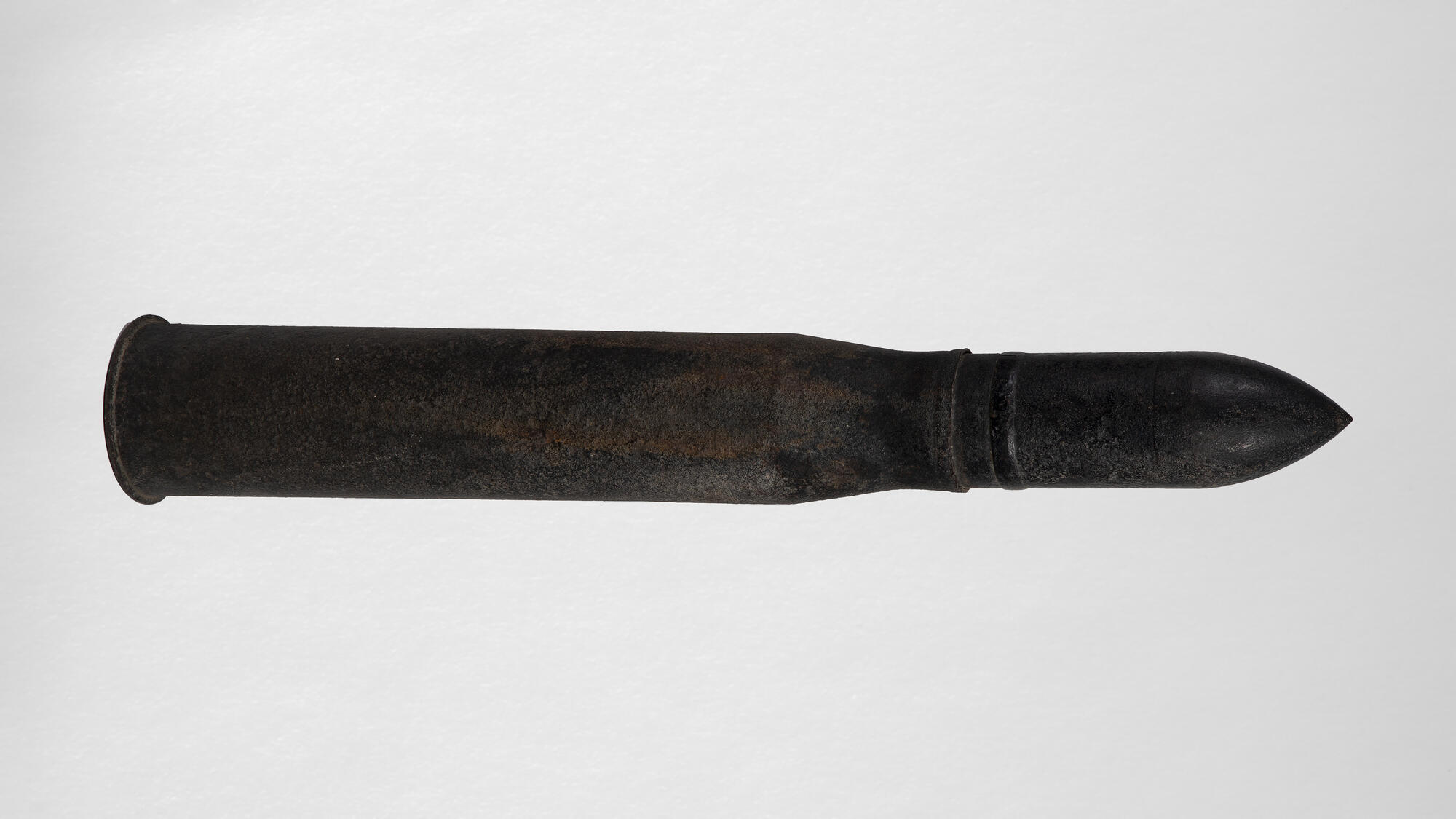


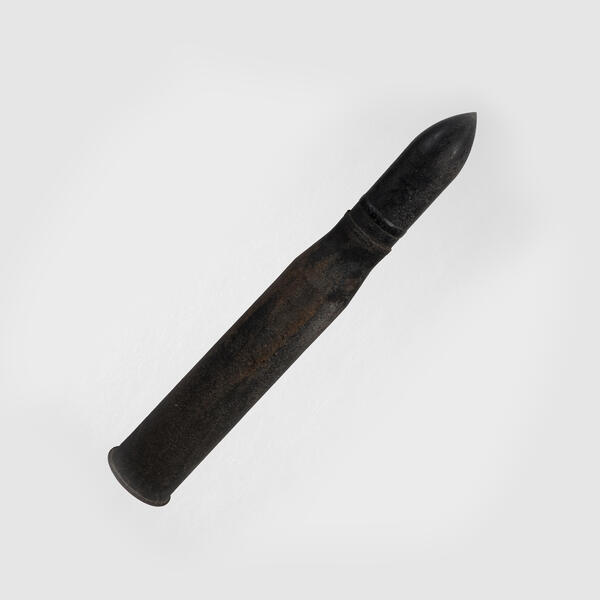
The Zimovniki Museum of Local History houses an artillery shell. The shells of this type were used in the 20th century. Artillery is a type of the armed forces that operate firearms: mortars and cannons. Since the 18th century, the Russian army has regularly used field artillery in combat.
The shell was the main element of artillery weapons; soldiers used it to attack the adversaries and military equipment, destroy dugouts, shelters, and fortifications where the enemy was hiding.
A shell looked like a 70-centimeter tube that was closed from one end and had a flat bottom. It was hollow inside — that was the place where explosive and flammable substances were put.
Stones were the earliest projectiles thrown at the adversary. Since then the development of shells has come a long way. Different types of shells have appeared: hollow and full ones, their shape can be elongated or aerodynamic, payload-carrying or not, and even guided.
To enhance the blast effect, the explosive shell was filled with various elements: small balls or needles. When it reached targets and exploded, small pieces flew into different directions and caused more damage. Shells differed in caliber (diameter in the place where their cross-section was the maximum size).
In addition to the shell with a fuse and projectiles, there were also additional parts. For example, phlegmatizing agents were special additives included into the explosive component so that it would not to be affected by external factors. Also inside the shell, there were decopperering agents, which prevented the barrel from copper residue after firing shells with copper bands.
During the Great Patriotic War, there were blank shells without an explosive inside. They were used to light up the area at night, create smokescreens so that the enemy would have worse visibility, and to distribute propaganda materials.
Artillery cannons hit the target at a long range from three to nine kilometers. The weapons were heavy and complex, so several soldiers operated them at once.
The shell was the main element of artillery weapons; soldiers used it to attack the adversaries and military equipment, destroy dugouts, shelters, and fortifications where the enemy was hiding.
A shell looked like a 70-centimeter tube that was closed from one end and had a flat bottom. It was hollow inside — that was the place where explosive and flammable substances were put.
Stones were the earliest projectiles thrown at the adversary. Since then the development of shells has come a long way. Different types of shells have appeared: hollow and full ones, their shape can be elongated or aerodynamic, payload-carrying or not, and even guided.
To enhance the blast effect, the explosive shell was filled with various elements: small balls or needles. When it reached targets and exploded, small pieces flew into different directions and caused more damage. Shells differed in caliber (diameter in the place where their cross-section was the maximum size).
In addition to the shell with a fuse and projectiles, there were also additional parts. For example, phlegmatizing agents were special additives included into the explosive component so that it would not to be affected by external factors. Also inside the shell, there were decopperering agents, which prevented the barrel from copper residue after firing shells with copper bands.
During the Great Patriotic War, there were blank shells without an explosive inside. They were used to light up the area at night, create smokescreens so that the enemy would have worse visibility, and to distribute propaganda materials.
Artillery cannons hit the target at a long range from three to nine kilometers. The weapons were heavy and complex, so several soldiers operated them at once.