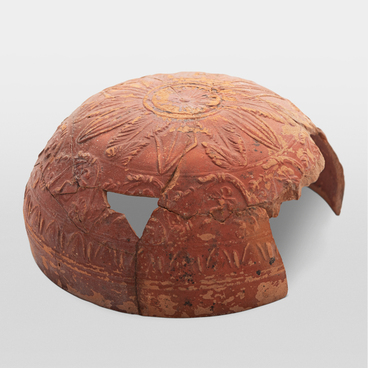
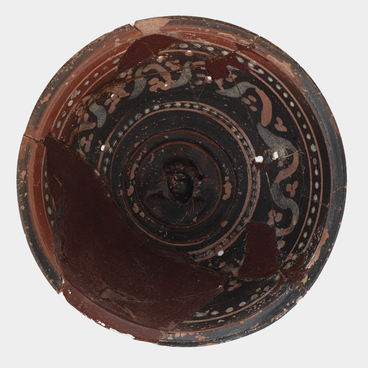
The exhibition of the Tanais Archaeological Museum-Reserve features an amphora — an ancient ovoid vessel with two vertical handles and often with a sharp conical tip at the bottom.
Amphorae were common in ancient times and were mainly used to store olive oil and wine. Grain and other cereals were also kept in amphorae. Their capacity could vary from 5 to 50 liters. Amphorae were widely used not only for trade but also in everyday life. Similar to modern bottles, amphorae varied in shape, size, and color of clay, which largely depended on the firing process. Over time, the shape of the vessel became associated with the region of origin. For this reason, each city sought to design its own unique vessel shape.
The museum collection features a Rhodes amphora. This type of vessel has several features. The rim is formed by a bead that is rectangular in cross-section and has an almost horizontal upper platform. The neck is high, taking up about one third of the total height of the amphora. The cylindrical, sloping shoulders smoothly transition into the ovoid body. The foot is cylindrical with a slightly concave base, separated from the body by a small ledge. The handles are round in cross-section and attached just below the rim, rising slightly, bending steeply, and then descending to the middle of the shoulders. Both handles feature stamps on the top. One of them belonged to the priest of the Temple of Helios on Rhodes. This is the stamp of Xenophon II, the eponymous archon who gave his name to the year in which he held office. The stamp on the other handle was placed by Simmias, owner of a pottery workshop. Fragments of broken amphorae were often used for paving roads. The handles were used as sinkers, manos, and molds for casting metal products. The walls of amphorae were used to make stoppers and spindle whorls. Amphorae also played an important role during festivals and memorial rituals.
Rhodes was the largest trading partner of Tanais during the Hellenistic period. Interestingly, unlike on other Aegean Islands, amphorae began to be produced on Rhodes only at the end of the 4th century BCE, and branding started in the 3rd century BCE. For two and a half centuries, Tanais imported Rhodes wine in amphorae of two capacities — of about 26 liters and 13 liters. The shape of the vessels changed slightly over time, especially during the 2nd and 1st centuries BCE.